

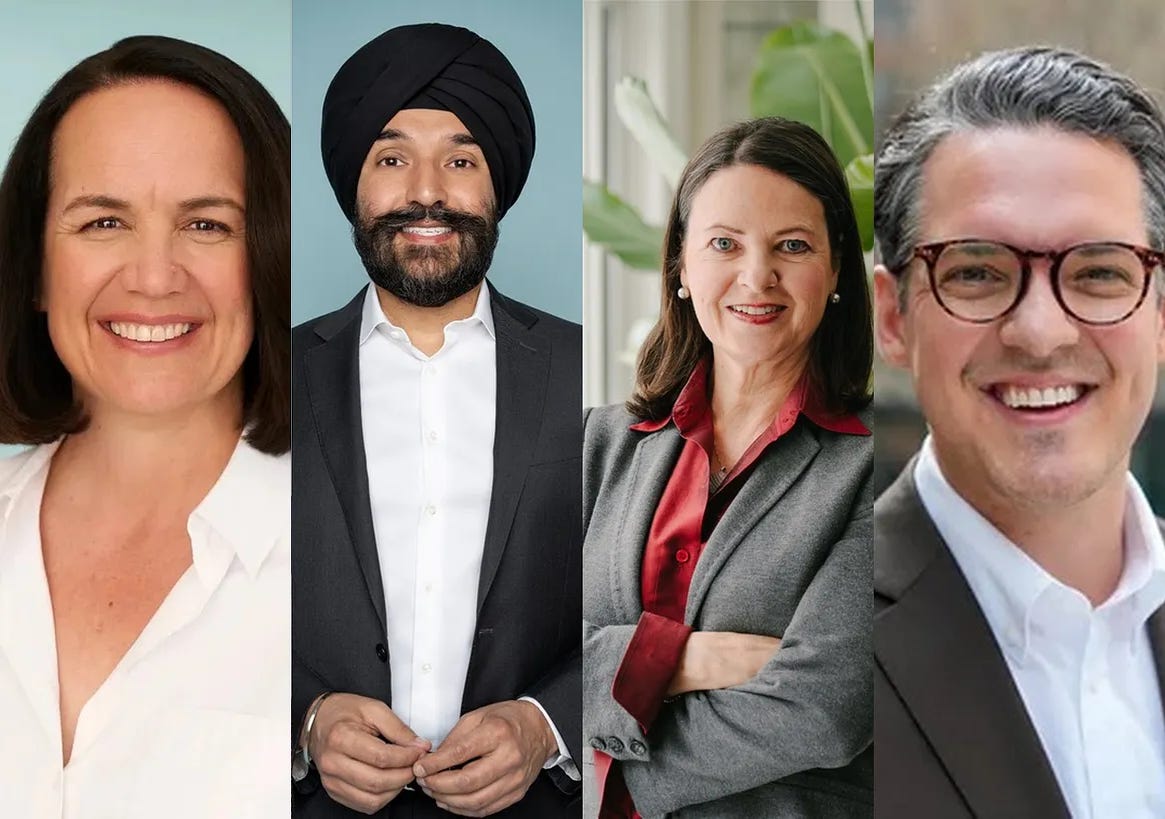
Voting in the Ontario Liberal leadership race closes today, Friday, November 20th, with the results to be announced tomorrow afternoon. Considering how little attention this race has gotten, it is a momentous occasion for the province, and could decide the course of the next decade or more for Ontarians. Whoever wins is immediately the first or second most likely person to be the next premier.
Doug Ford is still a popular premier, all things considered, and he has been in power for the better part of a decade, which is quite impressive. That said, the next election will likely come after 11 years of Ford, and the winds of change may finally be starting to blow.
The NDP, for its part, seems to have maximized its seat count, though its advocates would say it’s still on the up and up.
So, there is a clear path for the Ontario Liberals to win the next provincial election.
Each remaining candidate brings a unique set of experiences and positive qualities to the table. To be clear, I think all four are up to the challenge, and any of them could be exactly what the province needs. But the decision belongs to the 20,000 or so Ontarians who will cast a ballot, and their motivations may be very different from those of the general public. The winner will need about 10,000 votes by the end of the day. The skill of winning a leadership race is not the same as the skill of winning a general election.
Here, in alphabetical order, is why each of the candidates appeals to the electorate, and what the party can expect if they are chosen to lead.
Navdeep Bains
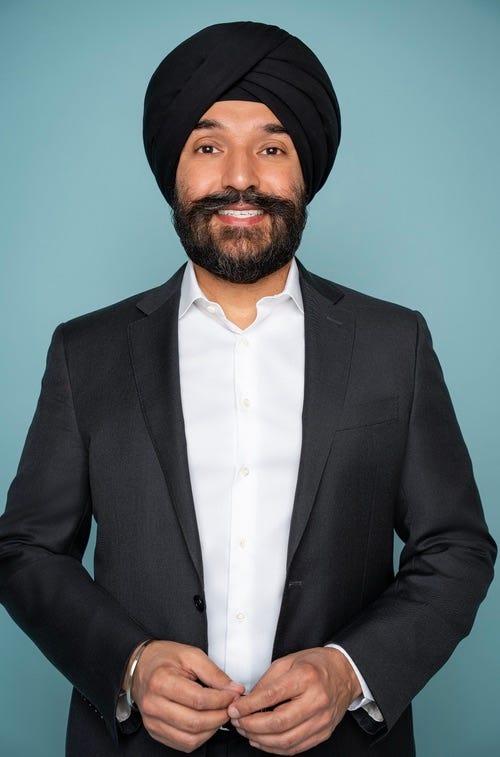
The case for Navdeep Bains starts with his experience, the most of anyone in the field, and his federal connection. His voters will believe those ties are vital to winning. Bains is a clear link between the Trudeau era and a government that has been in power for over a decade. Folks who want that track record front and centre will vote for him. He will also likely post a high vote share in Mississauga and Brampton, where he was the federal MP. The question is whether he transcended that local popularity and reached the wider province.
A Bains leadership would likely mean closer, more explicit ties with the feds, and a brand of politics that is a bit safer than his competitors’. He has been less descriptive than the other candidates in making campaign promises, speaking more in generalities. It’s a lot of “we’re going to make things better.” That leaves it a bit of a mystery where the party would begin, and what policy change under him would look like. Bains has said that unity among all four candidates, no matter who wins, will make a big difference, and he has committed to run for a seat in the legislature regardless of the outcome.
His first challenge is that a Bains leadership will struggle to detach itself from the Trudeau era, and that’s a unique problem. Many voters feel no loyalty to the federal Liberals, for various reasons, but are holding on to the provincial Liberals, and vice versa. Finding alignment there is vital. Explaining, reconciling or positioning his experience alongside a less-than-popular ex-prime minister would be job number one.
The other big challenge is his lack of a seat at Queen’s Park. There may or may not be an advantage to having a seat, but a large portion of voters perceive that it makes a difference. Managing and containing that perception will be among his top priorities. The Conservative attack ads are likely already drafted.
Stephanie Bowman
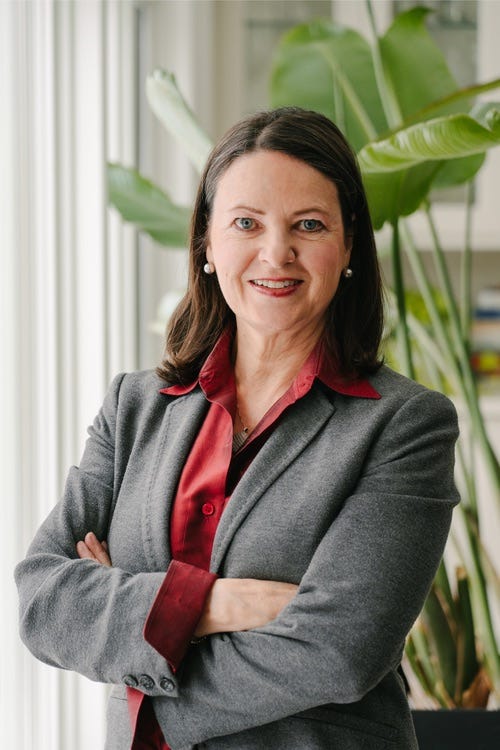
Stephanie Bowman is the most fiscally focused of the four remaining candidates. The way she talks about the economy is very similar to how Mark Carney talks about it, and her fiscal bona fides rhyme with his. She served on the board of the Bank of Canada, for example. Ideologically, she seems closer to a red Tory, a classical liberal. People are pretty clear that Bowman is the best on the economy, and many undecideds conceded that she would make a phenomenal finance minister. Whether they think she would be a great premier remains to be seen.
If Bowman is the leader, it will be quite indicative that the economy is the number one issue for voters, and that they think that extends to the general public. This would shift the Liberals’ focus towards a more fiscally responsible, pragmatic mindset. They could end up moving further to the right than the PCs on many matters, which could absorb a lot of Ontarian voters.
Bowman is also committed to beefing up the party’s infrastructure in the interim, as it prepares for an election that will likely take place in 2029 or 2030. The big challenge for her as leader will be building her brand and making herself better known. She came to the race late, which could mean she didn’t build critical mass, especially in an election where every little edge could be the difference.
Bowman holds the seat of Don Valley West, which is Kathleen Wynne’s old seat. An interesting parallel to Wynne if Bowman comes out on top.
We interviewed Stephanie last week. You can watch or listen to the full podcast here:
Lee Fairclough
Lee Fairclough is the slight betting favourite at this time. She is the logical successor to Bonnie Crombie, in the sense of the Ontario Liberal Party (OLP) narrative continuing. She also has the endorsement of Eric Lombardi, which is significant. Endorsements matter when there’s not much daylight between candidates, and right now there doesn’t feel like much between any of them.
Anecdotally, her experience and résumé have resonated the most with casual observers when I explain the candidates to them. Eyes light up when people hear that she played rugby for Team Canada. In conversations with locals here in Toronto, many seem aligned with her, and she has a lot of endorsements from established Liberals. So if the party’s infrastructure is dependable, there will be a Fairclough victory.
Both Fairclough and Bowman have seats, and neither has any kind of Trudeau association. If Fairclough wins, there will be a lot of attention on Doug Ford, paradoxically, and healthcare will be the primary motivator for many. Fairclough has experience in the healthcare space. She tries to position herself as the candidate who holds Doug Ford to account every day. That’s what she opens with. But winning an election as the anti-Ford candidate may or may not be a winning strategy.
Her biggest opportunity will be getting the party aligned behind her from the start, ostensibly to hold Doug Ford to account. Her biggest challenge will be transcending the sleepy nature of provincial politics.
To a casual voter, Bowman and Fairclough have similar profiles: experience, seats in the legislature and more established OLP infrastructure, to name a few.
Dylan Marando
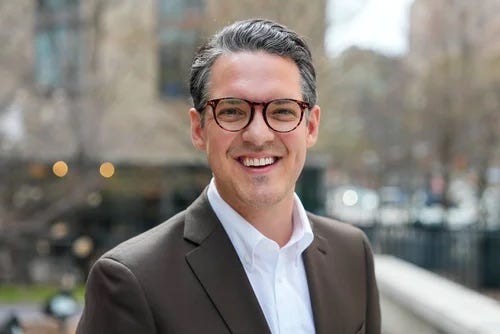
If Dylan Marando is going to win, it will be because he convinced enough of the party that he is the best shot at winning a general election down the road. He has been framing himself as the change candidate for a future change election, and by virtue of his age alone, he is. His story is compelling. Marando maintains that the only time the Ontario Liberals have gone from third to first was when they went with a young person, à la Dalton McGuinty. He worked for McGuinty, and that’s the path he is trying to emulate. He told me he doesn’t really believe in left and right, but from my appraisal he does seem to be a little more explicitly progressive in some of his promises than the other candidates in the field. He describes this as being “unapologetically Liberal.”
The system is a ranked ballot, so second-place votes absolutely matter, and it will be interesting to see whether Marando can pick up enough of them. If he does, he might just be the next leader. His biggest strengths, if elected, would be his charisma, exuberance and energy, and his ability to resonate with the younger generation. It would be easier to frame the OLP as the “New Liberals” under him. His deficit, similar to Bains’s, is an association with the Trudeau and Wynne eras, which is a large knock. He also doesn’t have any experience actually governing, so that is a vulnerability. And like Bains, he lacks a seat, which is another complication, even if Marando thinks it’s actually an advantage.
We interviewed Dylan last week. You can watch or listen to the full podcast here:
The call
If I had to wager a toonie, I’d say Fairclough is going to be the victor here, but I don’t say that with any kind of real confidence. The race feels too close to call, and I wouldn’t be surprised if any candidate won. There is so much unknown about the leanings of the province’s disparate ridings, especially outside the south. All the candidates live and spend most of their time in the GTA. So the race may depend on who was able to get the most traction further away from Queen’s Park.
Some of that uncertainty comes from the fact that this campaign has been severely underreported, and all of the candidates still think they have a legitimate shot at winning. It’s not hot air either. Whether it’s Fairclough or anyone else, they’re all good choices.
It’s going to be a fascinating afternoon on Saturday, with results starting to come in at 1 p.m. As we sit on the eve of a new age in Ontario Liberal politics, it will be vital for the province to have the Ontario Liberals back on their feet, with a firm and positive mission for where they go next.
Love or hate Doug Ford and the PCs, Ontario has a lot of problems that need solving, and strong opposition goes a long way toward keeping any government accountable. Politics is better when every party is the best version of itself.
Past articles covering the OLP race:

