

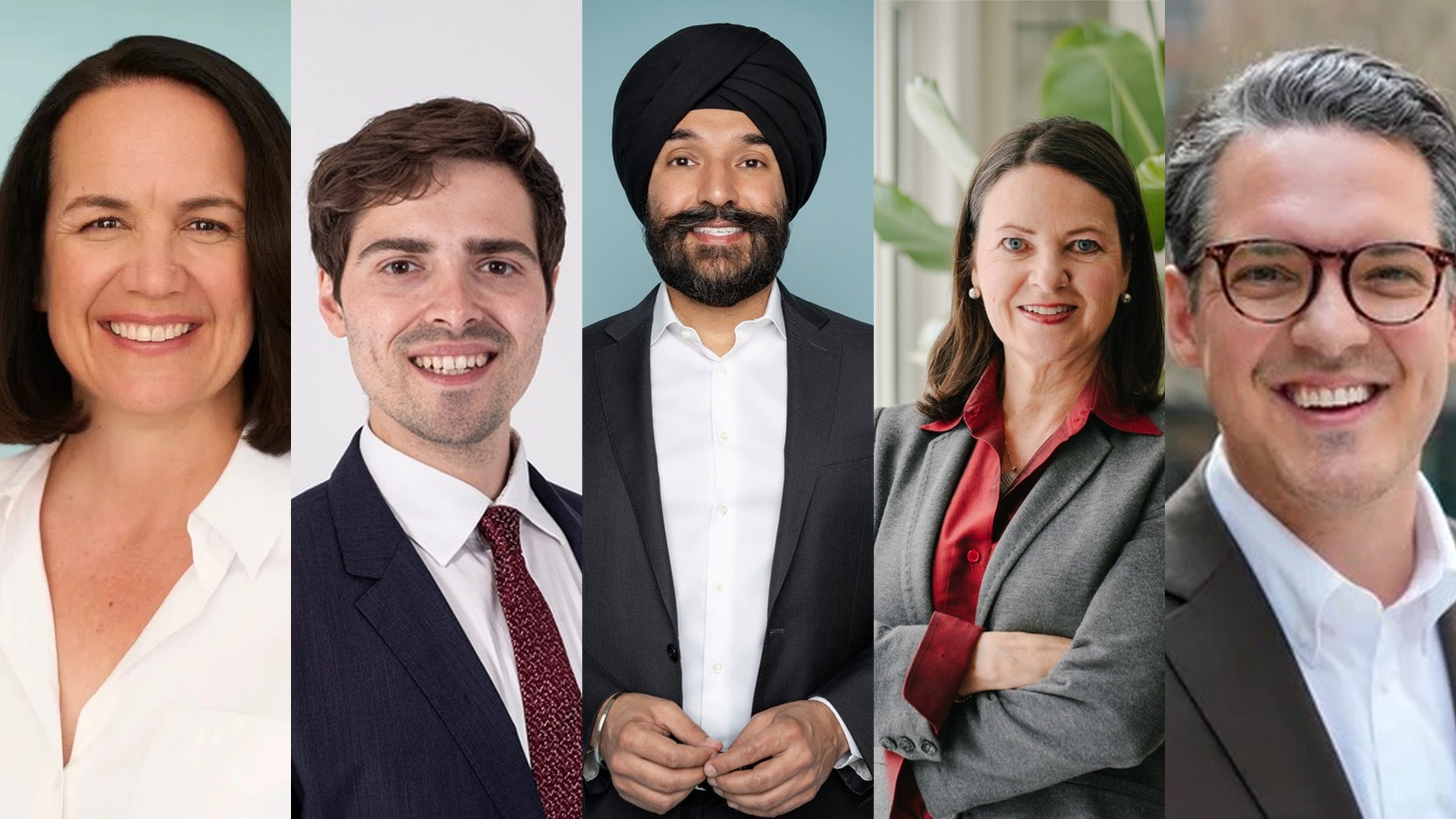
I watched the Ontario Liberal leadership race debate. Twice.
You probably don’t need to. And you likely haven’t. As of the publishing of this article, the YouTube stream has yet to hit 10,000 views. There’s something about Ontario politics that just does not seem to resonate with Ontarians.
It’s a sleepy industry, and the debate was sleepy. What’s frustrating as an observer who has met most of these candidates personally, I can attest to the fact that in reality, they are anything but sleepy. They are smart and passionate and energetic, but something about the presentation of this event did not hit home. The technical production of the debate has done the Ontario Liberal Party no favours.
The video was grainy. The questions were dull. The candidate interaction was missing. By my count, there were a grand total of 0 disagreements during the debate. Even the moderator, Tina Yazdani — who is an incredible reporter — was sleepy at times. She barely asked follow-up questions and never pushed back.
Ultimately, the party is not doing itself any favours with this kind of presentation. It was no wonder that the Globe and Mail’s report on the debate was just as dull. Their chief takeaway was that shockingly, the candidates who sit in the legislature think it’s important to sit in the legislature while the others don’t. During a sleepy news cycle, there was practically 0 coverage. There was no live audience, there was no candidate profiling. This is essentially a semi-final for who is going to run the Province of Ontario, the most indebted sub-sovereign state in the world, and just about no one is paying attention.
Yes, it’s early, and there’s a long way to go. But the central issue with provincial politics — and one that the Ontario Liberal Party can certainly think about attacking as an opportunity — is the lack of awareness and buy-in for this kind of event.
If a leadership debate happens in the woods, and no one is there to hear it, does it make a sound?
The party can perhaps be forgiven for not delivering a Netflix special. It is leaderless and relatively speaking still decimated, recovering from the Wynne cataclysm. So perhaps this production was (re)growing pains for an institution that ought to have a little more flair.
Who won? Nobody, really (I do have a winner listed below). Doug Ford, probably.
All that being said, There is real value in actually paying attention to the substance of this debate. Each candidate brings to the table a wealth of skills and traits that make them suited for public office.
The race is wide open.
So here’s my rundown of the five candidates, how they performed, and what they might need to do to next.
1. Lee Fairclough
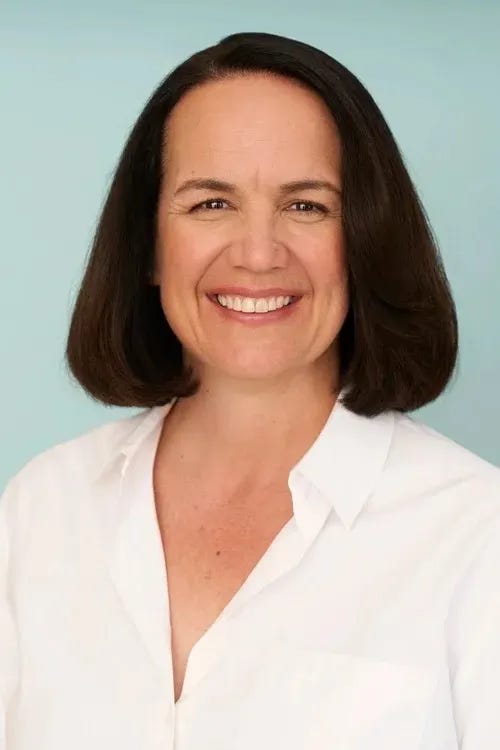
On her best days, Fairclough has a Churchillian quality to her. She comes across as suited to be a wartime politician. She has the bona fides. She was considered a favourite early on in this race. She has a strong message and wants to frame her MPP experience alongside a strong healthcare record as what should carry her to the leadership.
She is the MPP for Etobicoke-Lakeshore and positioned herself as an expert on healthcare. Before government she was the president of St. Mary’s General Hospital in Kitchener senior vice-president at CAMH. She also now has over a year under her belt of understanding the inner workings of the legislature. But the takeaway from the debate is that she really despises Doug Ford.
While all candidates took various digs at the premier, Fairclough might have been the most guilty of focusing on the negatives of the premier as opposed to her own positive qualities. In a crowded field, being the anti-Ford candidate doesn’t resonate when that is table stakes to being leader of the OLP. That being said, the people who vote tend to be entrenched partisans, and they really hate Doug Ford — so perhaps this is intentional.
2. Eric Lombardi
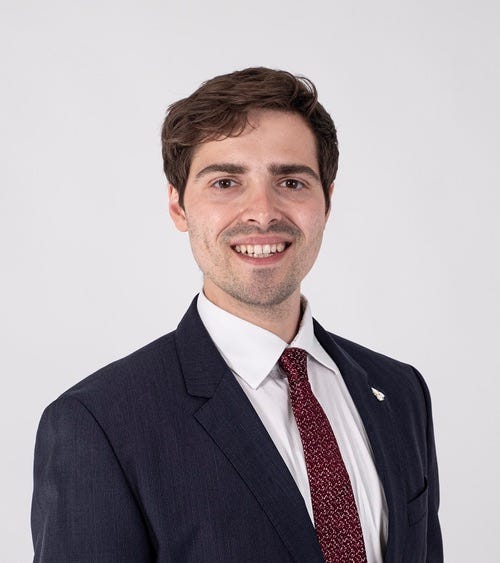
Lombardi is the longest shot to win this race given his age and experience. But he does have the most thought-out platform and a real vision for change.
The policy wonks in the Liberal base and those across partisan lines have been paying close attention to Lombardi. This can be a strength or a weakness for the candidate. Supporters would suggest this opens up the Liberal tent, while detractors would suggest this compromises “Liberalness.”
Lombardi is attempting to position himself and the Liberal party writ-large as going through a renaissance for the future. He clearly believes that the Ontario Liberal Party needs to set itself apart and cannot just be an alternative to Doug Ford and the Conservatives. Rather, they need to have a positive purpose and build out a vision. Lombardi is taking a gamble that voters actually want substance and not just platitudes.
Paradoxically, to win over more die-hard Liberal voters, he might actually need to simplify the message a little. People reading this article are the 1%. They like to know exactly what the precise target for costing and policies around budget cuts is going to be. But that is not the masses. So Lombardi needs to distill his message into plainer language for certain broader audiences. “I have it all figured out, take my word for it and check receipts if you doubt” is different from “Here is exactly how I have figured it out.”
3. Navdeep Bains
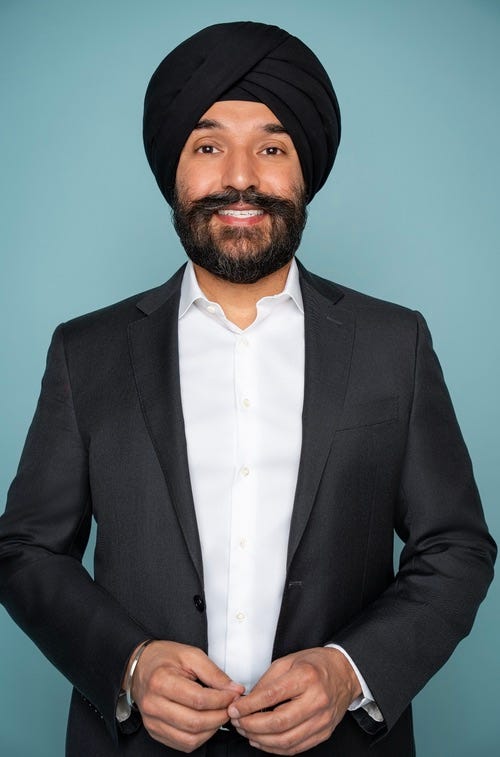
Bains has an aura best likened to a wise, kind uncle. He has a calm demeanour and often referenced his heavy federal experience in his time on the mic.
Of all the candidates, Bains perhaps focused most on the economy. He, however, did not get into detail on any of his statements, something that was a criticism of his platform that had been released earlier on Monday — vague promises with no details, which in his defence is exactly what all three Ontario major parties presented in the last provincial election.
Despite his assurances that it was a misconception, Bains is likely the favourite as of today and has the most momentum. He has the longstanding connections to the federal Liberal party apparatus, and he has spent lots of time working in corporate Ontario, which means deep pocketbooks and strong personal relationships.
As a frontrunner, Bains is the most likely to receive criticism, so he will be happy with the sleepiness of the evening. I would like to see Bains opine on why he feels he can drop into provincial politics after being in the federal cabinet. There is also an exploration to be done on why he thinks Ontarians should be interested in returning to a Trudeau-era staple. The federal Liberals have been spending their time the last year and a half trying to distance themselves from anything related to Justin Trudeau. The status quo is great for Bains.
4. Stephanie Bowman
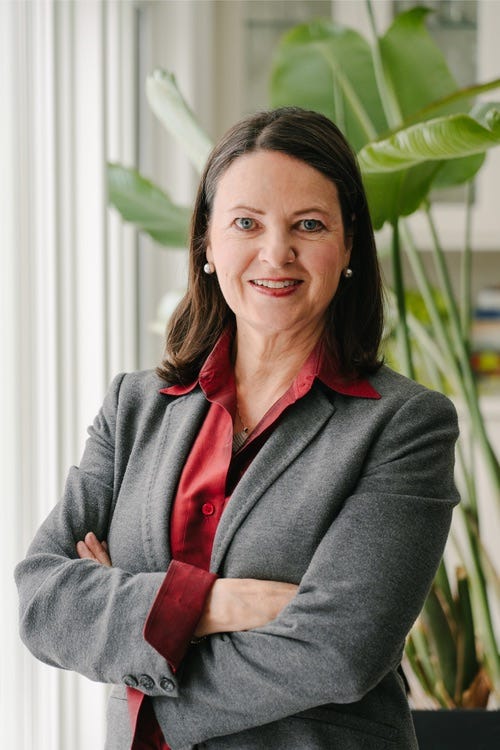
Stephanie Bowman is the MPP for Don Valley West. She spent the debate drawing on her track record of winning, having served in the legislature for four years. Bowman has the most provincial legislature experience, having been an MPP since the ancient year that was 2022.
That is rather indicative of Bowman’s appeal. She is the elder stateswoman within this group, and has more provincial legislature experience than the rest of the lot combined. I say that last part in jest, but it does go to show just how open this race can be.
Bowman’s best riffs were when she focused on the mechanisms of actually winning a provincial election. Bowman seems to best understand, or at least talks the most about, demonstrating tactical acumen when it comes to actually forming government. Whoever wins this race needs to make sure that this is top of mind for the party.
Bowman spoke about her economic background, having been an executive in the finance sector as well as sitting on the Bank of Canada board of governors. Bowman mentioned a tax cut, but did not elaborate.
Similarly to Fairclough, she needs to remember who she is debating — i.e., not Doug Ford.
5. Dylan Marando
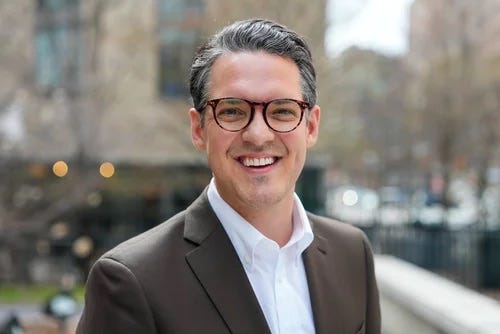
If I had to declare a winner for this debate, I would ultimately tap Marando, simply because, as the kids say, “he’s got that riz.” (Riz is Gen Z slang for charisma, I am told.)
Marando pushed his back office experience in both the Prime Minister’s Office and the Premier’s Office. Marando’s narrative is an attempt to draw a parallel to Dalton McGuinty. He believes the path ahead is to emulate the rise of the McGuinty Liberals in the late nineties and early two-thousands. Rhetoric-wise, Marando did the best, and that’s why I suggest he “won” the debate. If that means anything at all.
Marando played some classical politician greatest hits. He did it with gusto, and he was by far the most entertaining person to listen to throughout the debate. He was, however, also guilty of the Doug Ford bashing, and the chief criticism is that his proposed policies were high level.
The Takeaways:
All the candidates should remember that thinking Doug is doing a bad job is table stakes. While a dig here and there makes sense, it’s not a particularly good use of mic time.
There were hardly twenty thousand people who voted in the prior Ontario Liberal leadership race. So do debates even really matter?
Moving forward, here’s what each of the candidates will need to do to give themselves the best shot at success.
Bains will need to stay the course and try and keep this race sleepy.
Fairclough and Bowman need to figure out how they’re going to differentiate themselves. Bowman’s entrance crowds Fairclough’s lane specifically. Competition over the narrative of “the woman who has the experience fighting Doug Ford, having sat in the legislature” means both need to communicate why they are uniquely situated to win.
Marando and Lombardi will need to learn from each other if they want to be successful moving forward. Both could be strong youthful figures of change — “echo politicians.” Marando could borrow from Lombardi’s substance. Lombardi could borrow from Marando’s charisma.
All that being said, nobody has taken control. No one has yet emerged as a clear favourite, and the OLP would do well to think about how to galvanize the race a little.
The final wrinkle that needs to be addressed is the friction that comes with the format of runoff voting. It is difficult to project who is everyone’s second-favourite choice. The format complicates the strategy tremendously, because attacking another candidate comes with the risk of alienating their supporters. Candidates kept their powder dry last night, and a hesitation to make enemies might be the real explanation for why the debate was a bit of a snooze.
Moving forward, candidates who feel they need a spark will need to point out and leverage their differences. The key will be to find the right avenues of attack, but do so in the most respectful way possible.
For politics nerds, this race is fascinating. But for the vast majority of the sixteen million or so Ontarians, there is not nearly enough energy for this race to permeate the membrane of the collective consciousness or the news cycle.
If that is going to happen, it means that the party needs to do a better job. It means that the candidates need to do a better job. It means the media needs to do a better job.
The OLP leadership is there for the taking, and with Doug Ford’s popularity plunging, the premiership is there for the taking. Will one of these five find a way to break through?
You can watch the debate yourself here:
Nice analysis, Jacob.
I’ll admit I haven’t yet watched a lot of it.