

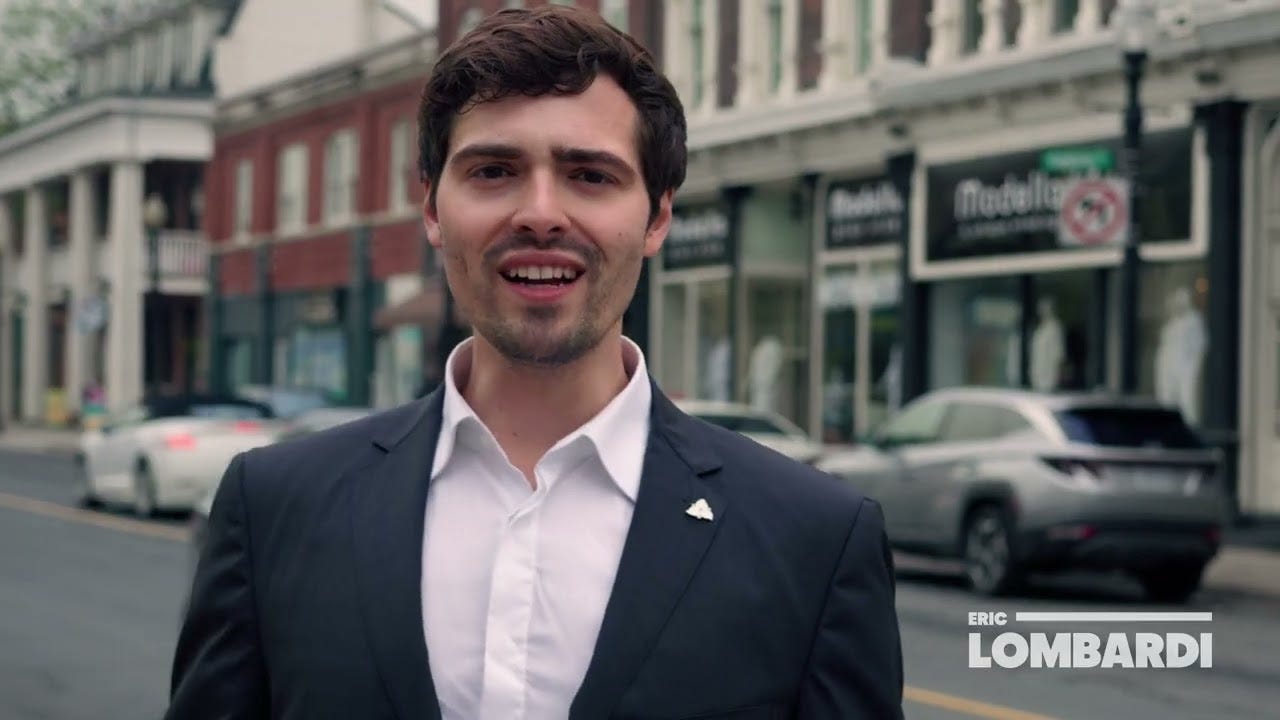
The five Ontario Liberal leadership candidates gathered in Toronto on Wednesday night to talk issues and policy, and to pitch voters in the big smoke on why they should be ranked number one on their ballot. The debate, hosted by Ginella Massa and John Michael McGrath was highly technical, and each candidate proved why they could be the next leader. The biggest news of the evening however, was the announcement from Eric Lombardi that he was suspending his campaign and dropping out of the race.
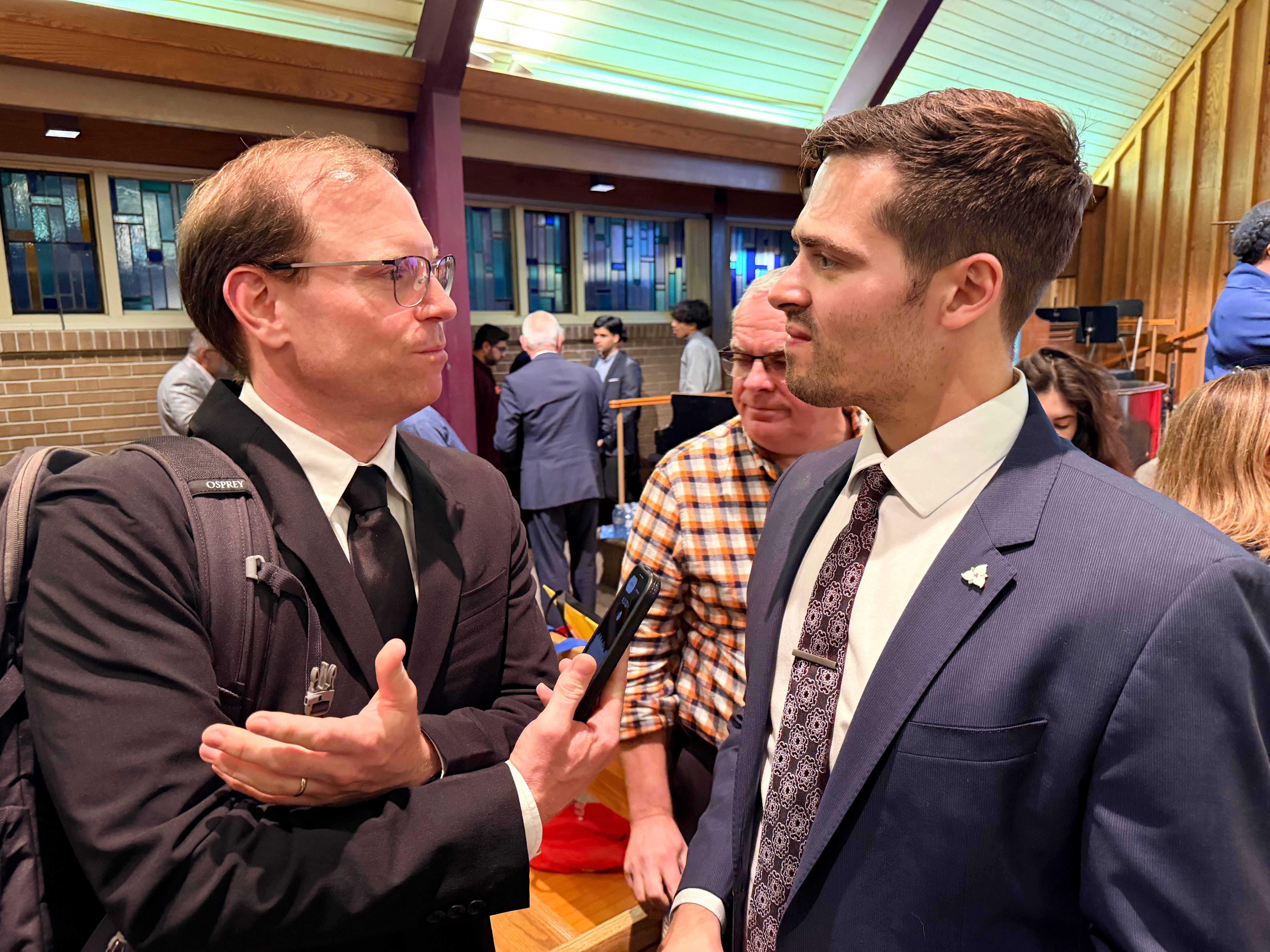
An Ode to Eric Lombardi
Running to be premier may always have been a cheeky ambition, but we can learn a lot from Mr. Eric Lombardi.
If you’ve been generous enough to spend some time reading my analysis, firstly, thank you. Secondly, that analysis is a direct testament to the work Eric has done and his positive abundance vision for the future of Ontario. Quite frankly, if it wasn’t for Eric, I simply wouldn’t have been in the room last night listening to the candidates making their pitches. He inspired me to get off my couch and get in the game.
Eric is young, passionate, and incredibly smart. Most importantly in my estimation, he embodies something that is so lacking among the vast majority of young Canadians : a willingness to put himself out there, enter the fray, and actually try to make a difference.
I have a theory about Canadian politics: most Canadians primarily consume American media and American political content. This causes Canadians, especially young Canadians, to think about politics as a spectator sport. They literally can’t impact U.S. politics at all. All they can do is watch. So we transfer that pattern into domestic issues, and we have subtly trained ourselves to look at politics as something that happens to us, not something that we happen to.
Eric is the kind of person who bucks that trend. He brought a unique bent to the campaign: his relentless belief that policy really matters, and that political rhetoric demands substance in order to effect actual change.
Thank you, Eric, for inspiring me to get interested and involved. You moved the needle for me. I would not be writing about provincial politics if it were not for your courage. I am proud of you, and I am looking forward to seeing what you do next.
---
And Then There Were Four
Lombardi’s announcement came at the end of a Toronto town hall hosted by a whopping seven riding associations, and the difference from the debate the party aired on Monday was night and day.
The questions were ostensibly the same: education, health care, etc., but the energy was completely different. Politics is fundamentally about people. So naturally, having people in the room made this far more engaging, and each candidate popped in ways that the YouTube debate simply lacked.
In private conversation, I asked most of the candidates and their teams about the official debate room, and they confirmed that there are some serious challenges with that medium. The party would do well to consider changing how it presents its candidates. Simply having a live studio audience, even if it’s relatively small, might make all the difference.
Speaking to a camera in a sterile room is really challenging, and it is not serving the candidates, the party, or Ontarians. I suggested to multiple candidates that the streamed debates felt a lot like the lockdown days of COVID, and they unanimously agreed.
One candidate had a clever suggestion. Open up some tickets for a live studio audience and position them as a fundraiser for the party. Just having a real-life person giving you those subtle feedback signals, a smile, a head nod, eye contact, all make an enormous difference.
Some notes on each of the remaining four candidates:
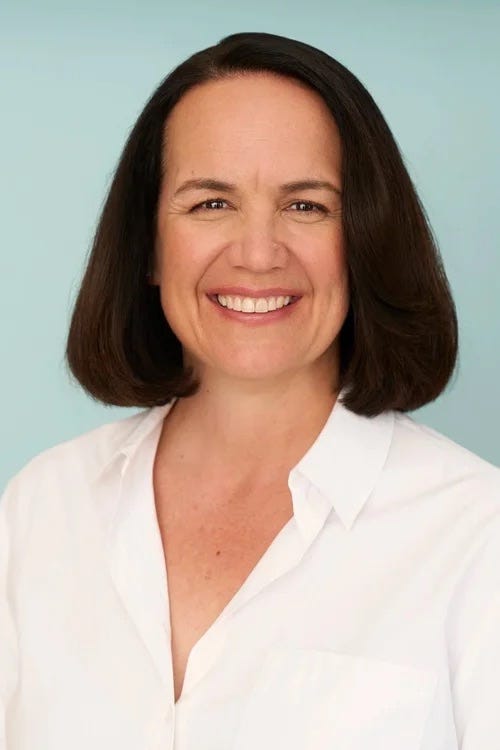
Lee Fairclough
In his resignation announcement, Lombardi endorsed Lee Fairclough as his pick for Liberal leader. Needless to say, it’s been a good week for Lee.
Fairclough has a Churchillian quality to her, one that shows some strength and gives you the impression that she could go toe to toe with someone like Doug Ford. In person, you can see the quiet confidence of an athlete focused on winning. She used to play rugby at the highest level and she has an aura that makes you believe she knows what it’s like to be in the trenches.
Fairclough is currently the most likely candidate to be leading the party moving forward.
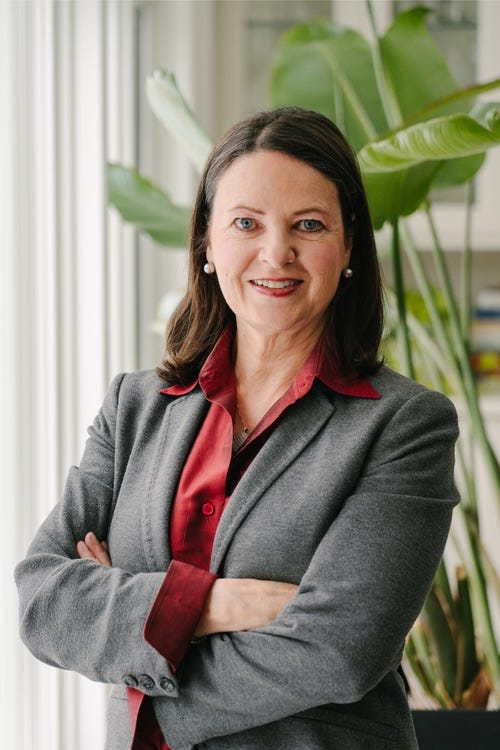
Stephanie Bowman
Bowman was the last to join the race, but she is no slouch. From a technical standpoint, she might have had the best answers at the town hall. She was constantly pointing out nuance, and really wanted to demonstrate she sees issues like safe injection sites from different perspectives. Bowman has also started leaning into a couple of signature lines, like “education policy is economic policy” and “an economy with heart.”
Her supporters, of whom there are many, especially in Mid/Uptown Toronto, home to her riding of Don Valley West, tend to really appreciate her tactical mind.
Being late to the party meant she clearly saw a path to victory. She is running some interference on Fairclough in the sitting-MPP lane, though. While that can cause tension, it could also make for a natural alliance on vital second-place votes in the Ontario Liberals’ ranked ballot system.
Dylan Marando
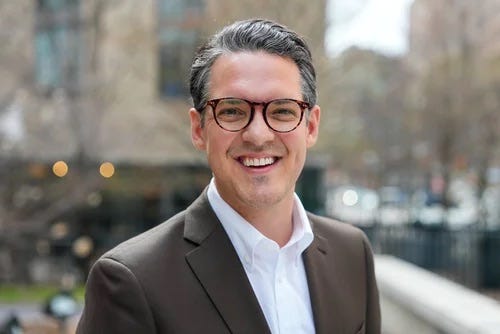
With Lombardi dropping out, Dylan Marando has sole possession of the “Dalton McGuinty generational-change” lane in this race. Marando worked for Kathleen Wynne and Justin Trudeau, and when pressed, he was unabashed in saying that’s the kind of Liberal he is.
His proposed policies tend to echo that progressive bent. Marando has made some explicit promises that lean more left than centre like wrapping mental health into OHIP.
Marando is now the only candidate who’s never been elected to office, but he’s also the only one who’s worked in both the Prime Minister’s and Premier’s offices.
Marando does have a compelling case, and perhaps the most compelling thing about him is his charisma. Of the leadership candidates, he certainly has the most natural aptitude for speaking to a room. You can tell he’s a fan of McGuinty, with echoes of the former premier’s cadence in his speech pattern.
Marando won’t be able to make the case that he is the most experienced, but he definitely could make the case that he is the most electable in a general election. As the kids say, “he’s got that riz.” It will be interesting to see if he leans into that angle.
Navdeep Bains
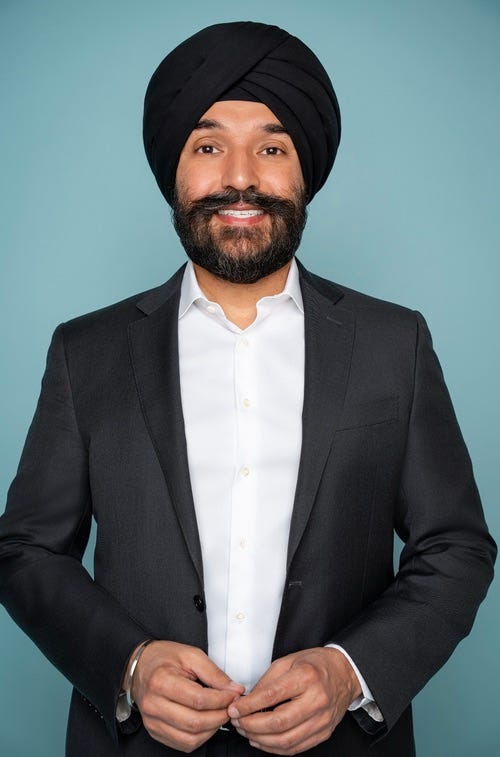
Finally, there’s Navdeep Bains. Frankly, the town hall moved the needle for me more on Bains than on any other candidate. In a previous article, I mentioned that Bains has a wise grandfather energy, and I genuinely believed it, given what I was seeing on my computer screen.
In real life, with a live audience of a couple hundred people in the room, Bains was almost a completely different person. He was lighthearted, gregarious, having a good time, joking with the candidates next to him, and far less rigid than his YouTube debate performances would suggest.
Bains has that federal experience, which is valuable in its own right. He was not willing to say whether or not he was a Trudeau or a Carney Liberal. He said instead that he was “just a Liberal.” Bains was a cabinet minister for Trudeau, so there is likely some allegiance there, but Justin Trudeau is not exactly in vogue, so perhaps Bains is making the calculation that that association could be a bit of an anchor.
What Kind of Liberal Are You?
In the aftermath of the debate, there was some eye-rolling online about that question: “Are you a Justin Trudeau Liberal or a Mark Carney Liberal?” It might seem benign, but in actuality it speaks to the heart of this race.
As I put it on Twitter in response to a criticism from Greg Brady: “Trudeau liberalism and Carney liberalism are very different animals. Trudeau Liberalism was a lot further to the left, and in a place like uptown Toronto, where the NDP traditionally has no chance of winning, a lot of would-be progressives really like that style. On the other hand, the Zeitgeist in Canada is very Mark Carney, which in turn is a very different flavour of Liberal. Whoever wins this race will determine the tack the party takes moving forward.”
So in a sense, it’s exactly the right question.
At the end of the day, four remain in what I am coining the Provincial Premiership Semi-Final. It is not unlikely that the Liberals win the next Ontario election, so the next premier just might have been on that stage last night.
Each has a phenomenal case to be the next leader, and while many electors might have already determined their first choice, it will be agonizing to figure out who should be second, third, and fourth.
This matters, so hopefully Ontarians are paying attention.
Extremely helpful! Thank you.
Gosh, Jacob. I think you’ve become my favourite political commentator. Very nice writing.