
Why Iran’s Fight for Freedom Cannot Be Ignored
Victoria Vali on why Iran's fight for freedom cannot be ignored

I was born in Canada to an Iranian family and raised between two realities. One is the freedom I experience every day in this country. The other is the constant awareness that, had my life unfolded differently, I might not be allowed to speak, dress, or live freely at all.
Loving Iran means being honest about what has been done to it. My family is proudly Iranian-Canadian. We love Iran deeply – its culture, its poetry, its history. But loving Iran also means being honest about the damage inflicted on it for more than four decades by the Islamic Republic.
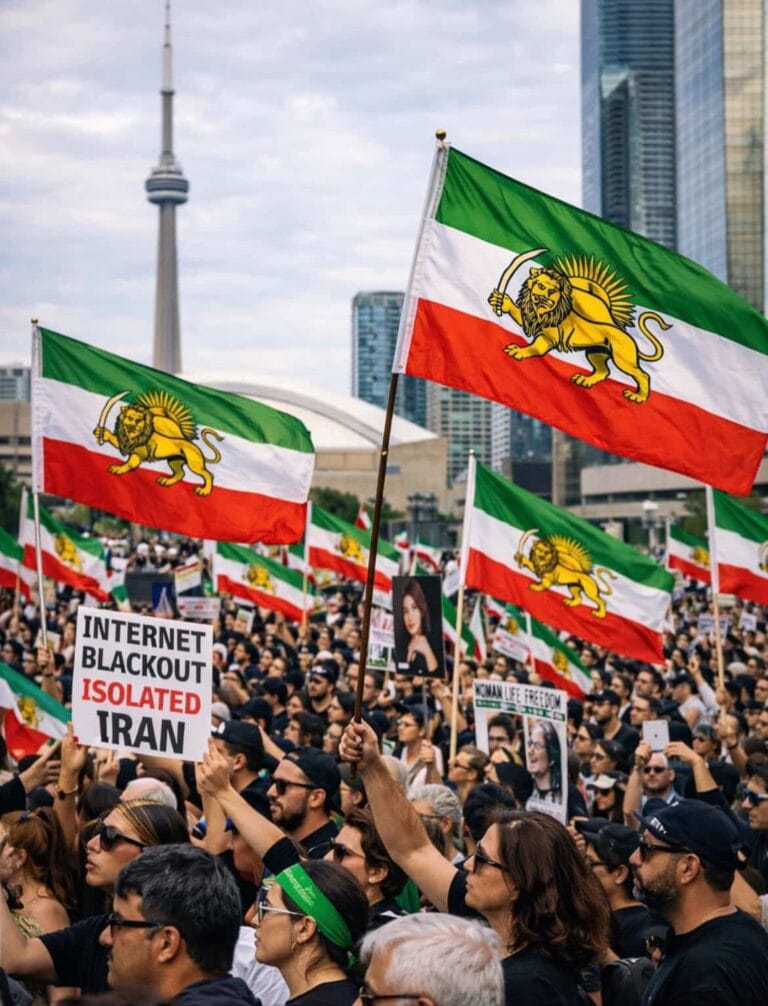
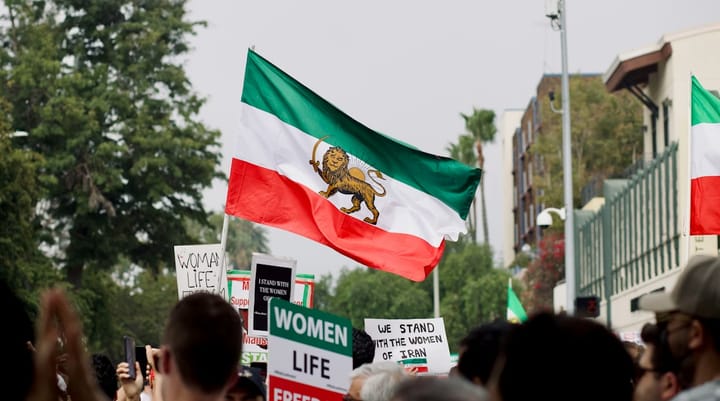
What is happening in Iran today is not an economic protest, and it is not a temporary flare-up of unrest. It is a sustained and unmistakable rejection of clerical rule. Iranians are not asking for reform or policy adjustments. They are demanding an end to a system that has governed through fear, violence, and repression since 1979. The Woman, Life, Freedom movement made this unmistakably clear, and the message has only grown stronger.
From where I stand in Toronto, watching videos shared quietly before internet shutdowns took hold, the message from inside Iran is painfully consistent. People are exhausted by moral policing, censorship, mass arrests, and a government that treats dissent as a crime. This is not about the cost of living. It is about dignity, autonomy, and the right to live without fear.
The state’s response has followed a pattern Iranians know well. Security forces have used live ammunition against protesters, carried out mass arrests, and deliberately restricted access to the internet to conceal abuses. This is not a government struggling to maintain order. It is a regime enforcing silence.
What has been hardest for me to process is not the brutality of the Islamic Republic. That brutality is familiar. What has been harder is the quiet from people around me who speak passionately about justice and human rights, yet seem unsure how to respond when the injustice is happening in Iran.
I do not believe this silence comes from indifference. I believe it comes from discomfort, and from a reluctance to engage with a reality that complicates existing narratives. In some cases, the language of Islamophobia is raised in ways that divert attention from what is actually happening inside Iran.
Criticizing the Islamic Republic is not an attack on Islam. It is not a rejection of faith or culture. It is a rejection of a political system that has weaponized religion to justify authoritarian control and violence against its own population. When fear of being labeled Islamophobic becomes a reason to stay silent, it does not protect Muslims. It protects power.
Iranians are not asking the world to condemn Islam. They are asking to be seen as human beings. They are asking for bodily autonomy, freedom of expression, and freedom from state violence. These demands are universal.
It is also important to remember that Iran was not always governed under religious rule. Prior to the occupation of the Islamic Republic in 1979, Iran was a secular, non-theocratic state. Religion did not dictate the legal or political system in the way it does today. This distinction matters, because the regime often presents itself as inseparable from Iranian identity. It is not.
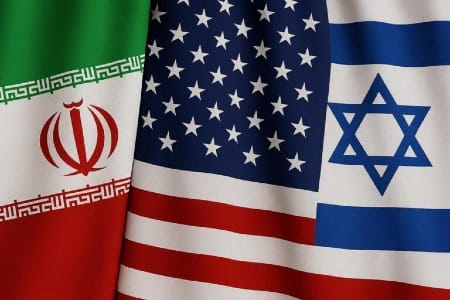
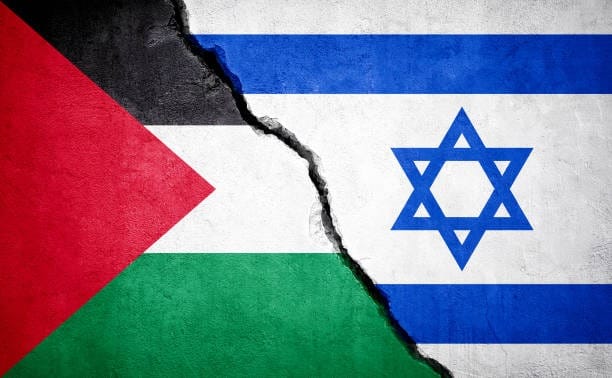
I have watched as global outrage rightly poured out for Gaza, where innocent civilians have suffered immensely. Human life matters everywhere. I mourn Palestinian and Israeli civilians killed and massacred by Hamas. I also mourn Iranians killed for demanding rights that so many of us already have. What is often left unspoken is the role the Islamic Republic plays in sustaining this violence. The regime funds and supports Hamas and other militant groups abroad, while ordinary Iranians face repression, poverty, and brutality at home. The same system that silences women in Tehran helps fuel conflict far beyond Iran’s borders.
For years, Iran’s protests have struggled to break through international media cycles. Attention spikes when demonstrations become impossible to ignore, then fades again, despite ongoing arrests, executions, and intimidation. Silence, even when unintentional, becomes a form of complicity.
For me and many others, this struggle is deeply personal. My grandmother had a deep long standing passion for poetry. She wrote countless poems about freedom, resistance, and uprising, words shaped by both grief and hope. Her writing reflected a belief that Iran belonged to its people, not to those who ruled it through fear. Growing up, her poetry shaped how I understood courage, dignity, and the power of voice. When I watch Iranians today risk everything to be heard, I see the same spirit she wrote about – alive, unbroken, and impossible to erase.
There is no going back now. Iran’s fight for freedom cannot be ignored in any honest conversation about human rights. These lives are not expendable, and their courage deserves to be seen and taken seriously.
** the editors at accordingto.ca asked Victoria if she could share a poem from her grandmother and she obliged. Here it is, “The Oppressor”
ستمگر
دفاع از آب و دين و خاك پاكم
ز دست دشمنان خانمان سوز
دفاع از كشورم اين خاك زرخيز
دفاع از مردمان ظلم پرهيز
دفاع بس مقدس از حريمم
دفاع از مردمان نازنينم
دفاع روز و شب با چنگ و دندان
گرفتيم خاكمان از مرد رندان
دفاع ما چه شد در آخر كار
نه صادقي بماند و نه ستمكار
الف: خ
ستمگر | The Oppressor
ستمگر
Oppressor
Setamgar
دفاع از آب و دین و خاک پاکم
Defense of my water, my faith, my pure land,
Defâ‘ az âb o din o khâk-e pâkam
ز دست دشمنان خانمانسوز
From the hands of house-burning enemies.
Ze dast-e doshmanân-e khânemân-suz
دفاع از کشورم این خاک زرخیز
Defense of my country, this fertile land,
Defâ‘ az keshvaram in khâk-e zar-khiz
دفاع از مردمان ظلمپرهیز
Defense of a people who reject oppression.
Defâ‘ az mardomân-e zolm-parhiz
دفاع بس مقدس از حریمم
A defense, most sacred, of my sanctuary,
Defâ‘-i bas moghaddas az harim-am
دفاع از مردمان نازنینم
Defense of my beloved people.
Defâ‘ az mardomân-e nâzaninam
دفاع روز و شب با چنگ و دندان
We defended day and night, with tooth and nail,
Defâ‘ ruz o shab bâ chang o dandân
گرفتیم خاکمان از مرد رندان
We reclaimed our land from deceitful men.
Gereftim khâk-amân az mard-e randân
دفاع ما چه شد در آخر کار
What became of our defense in the end?
Defâ‘-e mâ che shod dar âkhar-e kâr
نه صادقی بماند و نه ستمکار
Neither the righteous remained, nor the oppressor.
Na sâdeghi bemânad o na setamkâr
— Akhtar
Comments:
At accordingto.ca, We Believe in Rebuilding the Missing Middle.
If you believe in what we’re doing:
Subscribe. It’s free, and it tells us you’re with us.
Share. If something moves you, pass it on. Help us grow.
Contribute. Know someone who should be writing for us? Tell them. Or tell us.
We’re building something here. And we can’t do it alone.
Comments ()