
The Wild History of Fantasy Baseball
With fantasy baseball drafts just around the corner, Jeff Greenberg takes us through the history of the game.
Jeff Greenberg
3/10/20267 min read
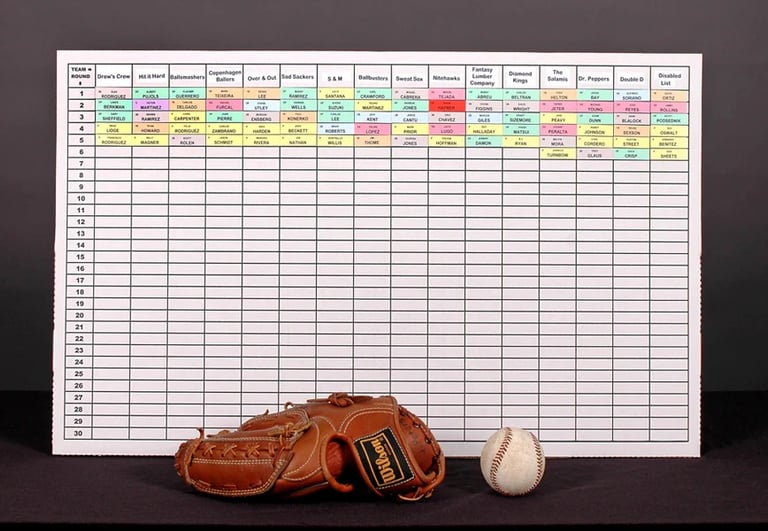
Eleven seasons. That’s not a hobby — that’s a commitment. Eleven years of pre-draft anxiety, waiver wire scrambles at midnight, and the very specific kind of heartbreak that comes from watching your star pitcher get scratched from his start due to a nagging injury. If you’ve ever played fantasy baseball, you know exactly what I’m talking about. And if you haven’t, I genuinely struggle explaining the hold it has on people.
But here’s the thing that doesn’t get talked about enough: fantasy baseball didn’t just materialize out of thin air when the internet showed up. It has a real, strange, and surprisingly human history — one that starts not with an algorithm or a Silicon Valley startup, but with a group of baseball-obsessed journalists sitting around a table at a French restaurant in east Manhattan, arguing about Mike Schmidt.


Before the internet, before the app — there was a napkin
The year is 1979. A writer and editor named Daniel Okrent is on a flight from Hartford to Texas, and somewhere over flyover country, he starts scribbling down the rules for a game. The idea was deceptively simple: what if a group of friends each “owned” a roster of real Major League Baseball players, and competed based on how those players actually performed during the season? Not simulated stats, not board game dice — real numbers, from real games, updated in real time (or as close to it as a newspaper could manage at the time).
When Okrent got back to New York, his first pitch fell flat. Nobody cared. But a few weeks later, a different group of friends — most of them journalists and media types — heard the idea and immediately got it. They started meeting at a French bistro on East 52nd Street in Manhattan called La Rotisserie Française. And that’s how the game got its name. The Rotisserie League Baseball held its first draft in April 1980. The first player taken was Mike Schmidt, at a cost of $26 in auction money.
There were eleven “founding fathers” total, and none of them thought for a second this would become anything beyond their little circle. One of them, Peter Gethers, later recalled that it was simply “the most fun thing in the world.” They were completely hooked. But they never imagined other people would want to do it too.
The part where it gets truly absurd
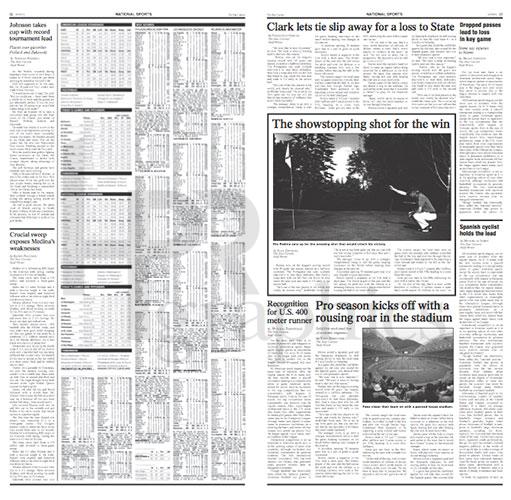
Here’s what makes the early days of fantasy baseball genuinely unhinged to think about from where we sit today: they did all of it by hand. No apps. No auto-scoring. No push notifications. Okrent would drive 30 minutes each way to pick up a copy of the Sporting News — which published player stats a full week behind — then go home and compute the league standings himself, by hand, and fax the results to everyone. The entry fee was $250 a person, and the standings arrived via fax machine.
And people did this enthusiastically. That’s the part that gets me. These weren’t people who had nothing better to do. They were professional journalists with deadlines and careers. They just loved baseball that much.
Fantasy baseball got its first real boost not from a tech breakthrough, but from a labor dispute. When the 1981 MLB players’ strike wiped out a big chunk of the season, the sportswriters covering baseball suddenly had nothing to write about. So they started writing about their Rotisserie leagues instead. That coverage spread the game like wildfire through press boxes and newsrooms across the country. By the second season, there were Rotisserie leagues in almost every Major League press box in America.
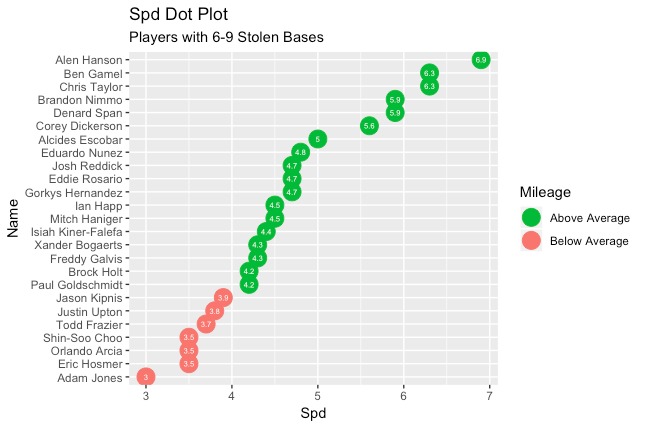
The bones beneath the surface: fantasy baseball and real baseball are deeply linked
This is the part that doesn’t get talked about nearly enough: fantasy baseball didn’t just borrow from Major League Baseball — it actively shaped how fans understood and consumed the sport.
The original Rotisserie scoring system tracked batting average, home runs, RBIs, stolen bases, pitching wins, saves, ERA, and WHIP. These weren’t random choices — they were the stats you could actually find in a newspaper box score. But because fantasy players were suddenly paying close attention to statistics in ways casual fans never had, demand grew for better, deeper analysis. Publications like Bill James’ Baseball Abstract emerged in the early 1980s precisely because fantasy players were hungry for smarter ways to evaluate talent.
In other words: the analytics revolution in baseball — the kind of thing that eventually became Moneyball — has a direct line back to a bunch of journalists trying to figure out whether their relief pitcher was worth rostering. Fantasy baseball didn’t just follow the sport. It pushed it forward.
The connection ran the other way too. When MLB went through its ugly labor conflicts in the 1980s and 1990s, fantasy baseball - arguably - helped keep casual fans tethered to the sport. If your players are still putting up numbers, you’re still watching games. You still care. Some sports historians have gone as far as to call fantasy baseball “baseball’s savior” during those turbulent years of strikes and lockouts.
The internet changes everything (again)
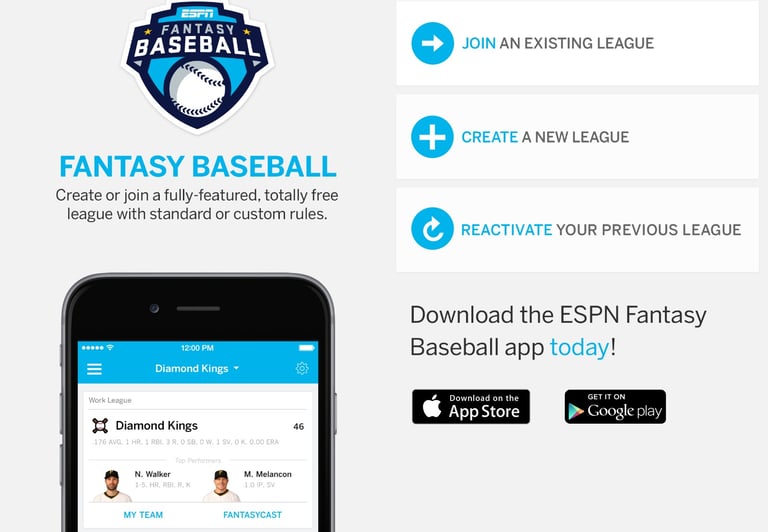
By the mid-1990s, the internet arrived and fantasy baseball exploded. Suddenly you didn’t need to calculate standings by hand or wait for the Sporting News. Stats updated automatically. You could check your team from your desk. You could trash-talk your league-mates in real time. The friction that had kept the game niche evaporated almost overnight.
ESPN launched its fantasy platform. Yahoo followed. The game moved from press boxes and accounting ledgers to millions of living rooms and, after a decade or so, everyone’s phones. What started as eleven people at a French bistro arguing about roster construction had become a legitimate cultural institution.
The founders, for their part, turned down a $1 million offer to sell the Rotisserie League concept back in 1983. They thought the real money was in selling t-shirts at conventions. It is, genuinely, one of the great miscalculations in sports history.

Why it still matters (and why it’s not going anywhere)
Fantasy baseball today is part of a global fantasy sports industry valued at roughly $32 billion in 2024, projected to nearly double within the decade. Tens of millions of North Americans play some form of fantasy sports. The platforms are slick (and improving), the data is instantaneous, and AI-driven analytics are starting to creep into lineup decisions.
But here’s what hasn’t changed in 45 years: the reason people actually play. It’s not the money (most of us aren’t exactly retiring on our league winnings). It’s not even the competition, though that’s a big part of it. It’s the fact that fantasy baseball gives you a reason to care about every single game on the schedule — not just your team’s games, but all of them. It makes you watch a Tuesday afternoon game between two last-place teams because your closer is pitching in the eighth inning. It keeps you locked in for the entirety of those meandering dog days of summer, down to game 162.
It also does something quietly remarkable: it builds community. Eleven seasons in the same league means eleven years of relationships — the jokes that never get old, the trades that still cause arguments at the draft table, the guy who has finished last three years running but shows up every April full of optimism. There’s a social fabric to a long-running fantasy league that most people don’t talk about but everyone who’s been in one understands completely.
Daniel Okrent once said the internet brought the game “joy to millions — and agony to millions of spouses and children.” That tracks. It also tracks that ESPN, when Okrent first pitched them on covering Rotisserie baseball in the late 1980s, told him fewer than 2% of their viewers played. Today, entire shows on ESPN exist solely to cover fantasy sports.
A game that grew up with the sport it loves
Fantasy baseball isn’t a distraction from real baseball. It never was. It’s an expression of the same obsessive love for the sport that made people sit in wooden bleachers in 1900, that made someone invent a tabletop game for a bedridden player in the 1860s, that made a writer on a plane sketch out scoring rules on whatever he had handy.
The tools have changed almost beyond recognition. The core impulse — to feel closer to the game, to have skin in it, to argue about who’s better and prove it with numbers — is exactly the same as it was in 1980, when eleven people sat down at a French restaurant in Manhattan and decided to draft a baseball team that didn’t exist.
If you’re deep into your eleventh season, you already know all of this. You just might not have known where it came from.
Get in on the conversation:
At accordingto.ca, We Believe in Rebuilding the Missing Middle.
If you believe in what we’re doing:
Subscribe. It’s free, and it tells us you’re with us.
Share. If something moves you, pass it on. Help us grow.
Contribute. Know someone who should be writing for us? Tell them. Or tell us.
We’re building something here. And we can’t do it alone.
accordingto
Our mission is to refresh the conversation, and democratize public discourse. We platform smart and spectacular people who are ready to challenge assumptions, explore nuance, and speak with clarity.
Contact
Subscribe
info@accordingto.ca
Discord: https://discord.gg/GUZeHrmZ
© 2026. All rights reserved.