
The Secret Curriculum
But the real value of JRPGs was far beyond all the menus and stat boosts. These games made you feel and experience things you probably weren't ready for. They made you confront ideas and consider concepts that didn’t show up anywhere else in young lives.
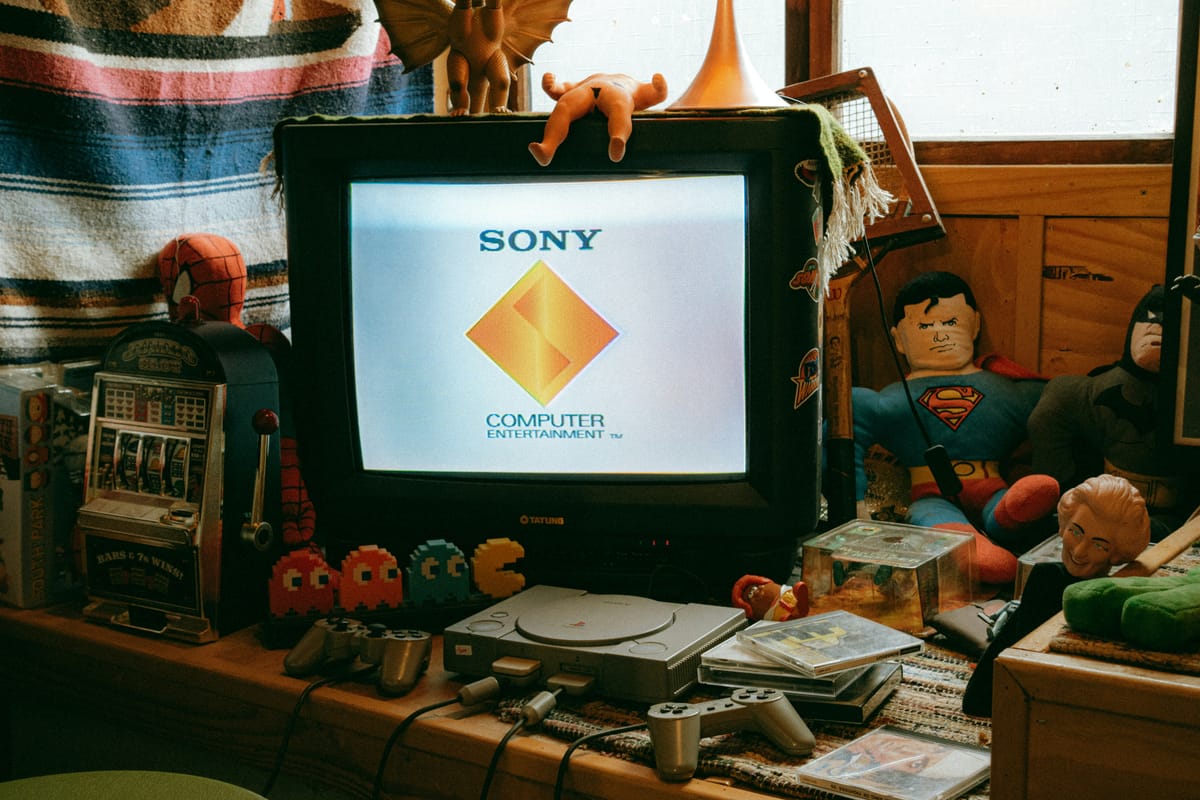
When I was eleven years old, a distant cousin let me play a demo disc on his PlayStation. Those demo discs were single CD-ROMs loaded with 4-6 short game experiences and videos. You’d find them in the latest magazine issue, cereal box, or by subscription, featuring upcoming games. They were mostly awesome, and often drew you to new genres and experiences. It was a refreshing new look at your hobby every single month, often enacting strain on the tight wallets of mom and dad.
The narrative of the demo I picked involved the journey of three angsty teenagers and their teacher. As part of their studies, they were eligible for mission assignments to assist the government of the land in war efforts, and had been assigned to battle an enemy squad over a contested communications tower. One of the teenagers wielded a unique weapon – a blade hilted with the trigger of a gun. Each had the ability to summon guardian forces – beings of legend – to demolish their enemies. My first choice was Leviathan – the towering primordial sea creature of Jewish mythology. Drowning the enemy soldiers and their commander with a massive tidal wave was immensely satisfying. At eleven, I was entranced and completely hooked.
After the battle ended, the game presented a still screen. Emblazoned on the still was ‘Final Fantasy VIII’ in epic font, alongside the game’s upcoming release date. My adolescent brain ate it up completely – the rich world building, the detailed character development, the comedy in the character’s relationships, the turn-based strategic combat – it just fit with how I had started compartmentalizing the world. This wasn’t a miniature plumber rescuing a princess from a castle. This wasn’t evading garbage trucks and dinosaurs to deliver newspapers on a bike. It was true narrative storytelling, akin to an epic novel.
As it turned out, I was part of a growing, silent club. For members of that club – creative dreamers and novice gamers coming of age in the 90s – these Japanese-made role-playing video games (JRPGs) were like a secret handshake. Our real world was all school bells, Saturday morning cartoons, and growing piles of homework, but the world on the TV was the perfect escape. That warm glow from the CRT monitor wasn’t just a screen; it felt like a workshop.
I learned the first rule early: you don’t just run at the final boss. It took hours of diligent preparation, fighting the same monsters, scraping together enough in-game currency to buy that next, better piece of gear. Your parents might roll their eyes, but you were actually in a tutorial – one that was slowly optimizing you for the tribulations of the real world.
When we look at the kids who grew up on JRPGs like Chrono Trigger or Final Fantasy in the present, many of them are building apps or startups, or writing code. It’s evident that those hours grinding for EXP rewired our brains a certain way. We weren’t just playing. We were building a cognitive toolkit.
For those in the silent club, there were valuable lessons hidden in between button presses: how the hidden world works. Each game in the genre was an intricate lattice of numbers and statistics — strength, magic, elemental weaknesses, status effects, weapons, accessories, armour. Nobody handed you a tutorial for it. You learned by getting your party wiped out, leading to the much-maligned Game Over screen. Why did that ice spell just heal the monster? Oh, right. Because it’s made of ice. Strong against ice, weak to fire. The game wouldn’t tell you; there was no Google to search; you had to figure it out from intuition, paying attention to character design, or a line of dialogue.
With enough repetitions we began to see the patterns of these pixelated universes make sense. Dedicated players were constantly solving a puzzle where every piece—every character, every spell, every helm—only made sense in relation to the others. While making breakthroughs against the toughest enemies, we were learning the fundamentals of cause and effect. I can’t help but see echoes of that now when a software developer diagrams a program, or a project manager lays out a team’s roles. The logic looks and feels familiar. It’s the same logic used when diversifying your party in Final Fantasy VI.
Then there was the grind. A staple feature of JRPGs from that era. Instead of walking up and striking a foe, your exploration would be rudely interrupted by invisible surprise attacks, accompanied by a raucous Battle Theme song. This was the game teaching you patience, determination, and that small advances in experience lead to achieving a goal. I vividly remember, in Final Fantasy VI, camping out in the forest north of the Veldt just to fight dinosaurs for hours, garnering experience and valuable equipment. It wasn’t exactly “fun” in the moment, but I loved it. It was a conscientious investment. You were putting in the work so that later, when the story threw something impossible at you, you’d be ready. There was no instant reward. Just the promise of a level-up chime and a few more Hit Points. If you were lucky, you may find another stat increase, or a rare item you’ve been coveting. That feeling — that sustained effort pays off — it sticks with you. It’s the same feeling you get when you’re deep into writing a paper, learning a new skill from the ground up, losing weight, or trying to teach your toddler how to play Connect Four. You learned to trust a slow, incremental process and reap the rewards that come from sticking to something when it gets tough.
But the real value of JRPGs was far beyond all the menus and stat boosts. These games made you feel and experience things you probably weren’t ready for. They made you confront ideas and consider concepts that didn’t show up anywhere else in young lives. These stories and grand narratives weren’t simply confrontations between good and evil. They were epics. Final Fantasy VI detailed the journey of a group of broken people trying to put their ruined world back together. Suikoden II followed the plight of two best friends ending up on opposite sides of a war.
You had to sit with these challenging ideas. You learned that the villain usually has a point, and that real heroes are always scared. The “why” of the journey mattered more than the destination. For characters like Squall, Cloud, or Yuna, the important purpose of the journey ahead outweighed the end result. I believe that bred a specific hunger in us—to find work with meaning behind a paycheque, to lead teams with a story behind the goal. Learning to navigate the complicated hearts of those characters was our first lesson – a masterclass in navigating the complicated people in our actual lives. It’s a struggle everyone relates to.
As Millennials become the decision makers – the parents, the CEOs – we can draw upon those incidental lessons, the ones we didn’t realize we were learning as we expertly crafted our parties. Those games were a safe place to train on life. They were practice for systems thinking, managing scarce resources, planning for the long haul, and understanding people.
So when I summoned Leviathan, when I commanded that primordial sea creature to rise in a cascade of pixels and static, I wasn’t just a kid winning a fight. I was conducting a symphony of cause and effect. I was learning to optimize a resource, to make a choice that would echo across a digital battlefield, and to stand unwavering no matter the consequence. And in a million dim rooms lit only by cathode rays, on a million worn carpets, a generation wasn’t just saving fantasy worlds. We were in silent communion, forging the very frameworks of our minds – the logic, the patience, the empathy – that would one day soon navigate the complexity of the living world. The training mission is long over. The grind is complete. Look around.
The real adventure was always here.



Comments ()