
Something Has Shifted
Jeff Greenberg on why many Jewish Canadians say Canada no longer feels the way it used to.
Jeff Greenberg
3/11/20267 min read
I’ve been quiet about this for a while. Not because I didn’t have something to say - but because I wasn’t sure I had the right words yet. I’m still not sure I do. But something has shifted in this country (and city), and I feel it in a way that is hard to articulate and impossible to ignore.
I’m a former Jewish professional. I’ve worked on university campuses, been trained as an Israel advocate, led multiple Taglit-Birthright experiences, and spent years embedded in Jewish cultural institutions. I’ve been, at various points in my adult life, actively engaged in the project of building, enriching, and protecting Jewish community in Canada. After my wife took on a more prominent role, I necessarily stepped back. Life moved on. Kids came along. The day-to-day noise got louder.
Then the noise outside got louder too.
What it feels like to watch from the outside
When I was working in Jewish community spaces, antisemitism felt like a manageable problem. Persistent, troubling, something to fundraise for, educate against and organize around - but manageable. Something you could build programs to address. That framing feels naïve now.
A synagogue shooting in Canada is not an abstraction. It is a specific kind of horror - the kind that reminds you that the place where you mark the milestones of your life, where you sit alongside family on the High Holidays, where you’d want your children to have a bar or bat mitzvah someday, is also a target. That awareness doesn’t leave you.
What compounds it is the response - or the lack of one. The statements come quickly enough. Condemnations are issued. Vigils are held. And then, almost as predictably, nothing changes. The institutions that are supposed to protect Canadians seem to treat antisemitism as a public relations problem rather than a safety crisis. The words land hollow because the follow-through never comes. At some point, hollow words stop providing comfort and start feeling like an insult. Moreover, persistent online rhetoric instantly becomes toxic - “they deserve it”, “they did it to themselves”, “it was an inside job.”
Campus, then and now
I spent years working on university campuses, and I loved the experience. There is something genuinely energizing about being around young people who are figuring out who they are and what they believe. Campus is where Jewish identity gets tested and, often, where it gets forged.
It’s also where some of the most difficult conversations happen. I saw that firsthand. Trained as an advocate for the state of Israel - not to shut down debate, but to foster it. To make the case for a complex reality with honesty and without apology. That work mattered to me. It still does.
But what is happening on campuses right now - including at my own alma mater, the University of Guelph - is different in kind, not just degree. Jewish students are reporting harassment. Jewish spaces are being targeted. The line between political speech and intimidation is being crossed, and in too many cases, the institutions that should be protecting students are at best equivocating and at worst apathetic. The message that sends - whether intended or not - is that Jewish discomfort is acceptable collateral damage in someone else’s political project.
I don’t believe the administrators making these decisions are antisemitic. I believe many of them are genuinely confused about where the line is, or genuinely afraid of making the wrong call, or genuinely captured by a political framework that has difficulty categorizing antisemitism when it comes wrapped in the language of social justice. That confusion doesn’t make it less harmful. It might make it more.
What the Jewish community taught me - and what it’s asking of us now
Working at Ashkenaz - a Jewish cultural organization in Toronto - was one of the formative experiences of my professional life. For anyone who isn’t familiar: Ashkenaz is a nonprofit dedicated to celebrating and sustaining Jewish arts and culture, rooted in tradition but expansive and evolving. It is exactly the kind of institution that reminds you of what you’re trying to protect when you advocate for Jewish life.
Jewish culture is not monolithic. It is not reducible to Israeli politics, or religious observance, or any single expression. It is a centuries-deep conversation - musical, literary, comedic, spiritual, culinary, argumentative, tender. To work in service of that conversation, even briefly, is to understand viscerally what is at stake when Jewish people feel unsafe. It’s not just physical safety, though that matters enormously. It’s the freedom to exist fully, visibly, and loudly, without looking over your shoulder.
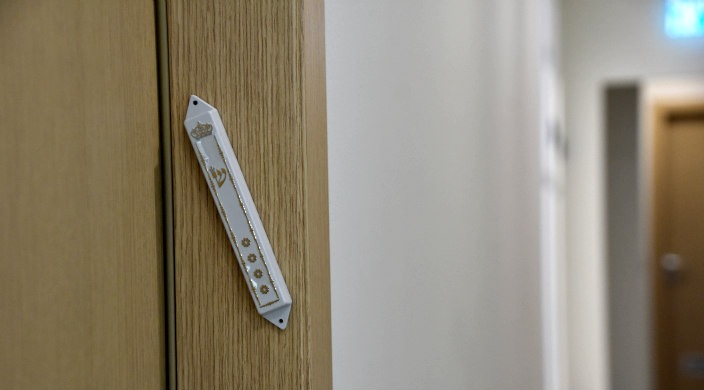
That freedom is eroding. Not everywhere, not all at once. But the direction is clear enough that Jewish Canadians are having conversations we did not expect to be having in this country, in this decade. Conversations about whether to take the mezuzah off the door. Conversations about how much to advertise where you go to synagogue. Conversations that feel like the beginning of something we thought we had left behind.
Raising Jewish kids right now
My children are four and one and a half years old. I cannot yet explain to them what antisemitism is. They are, right now, blissfully unaware that any of this is happening. That gap - between the world they’re growing up in and the innocence they still carry - is the part that keeps me up at night.
What do you tell a Jewish child about being Jewish in a moment like this? You tell them the truth: that being Jewish is a profound and beautiful thing, that the tradition they’re inheriting is one of the most rich and resilient in human history, that their people have survived catastrophes that were designed to end them and emerged still telling stories, still making music, still arguing about the right way to do things. This week, the exceptional Adam Hummel made this point phenomenally.
But you also must be honest - that the world is not always kind to that identity. Not to frighten them, but because a child who grows up with no framework for understanding hostility will be blindsided by it in a way that is far more damaging than the truth told carefully, at the right age, with love.
What I want for my kids is not a sheltered Jewish life. I want them to be proud. I want them to know their history. I want them to be the kind of people who stand up for others precisely because they know what it means to need someone to stand up for you. That’s the inheritance I want to give them. Whether the world makes it easier or harder for them to carry it, they will carry it. Their surname will always ensure that.
What I want non-Jewish Canadians to understand
If you’ve read this far and you’re not Jewish, I want to say something directly: we are not asking for your pity. We are asking for your attention.
Antisemitism is not a Jewish problem that Jewish people need to manage on their own. It is a social failure that implicates everyone who lives in a community where it is permitted to flourish. When a synagogue gets shot up and the political response is performative, that’s not just a Jewish community’s problem - it’s an indication of what a society is willing to tolerate. The answer to that question should concern everyone.
Jewish Canadians are not asking to be exempt from criticism. Jewish institutions, like all institutions, can and should be scrutinized. The state of Israel, like all states, can be debated. None of that is the issue. The issue is the leap - the quick, smooth, often unconscious slide from “this policy is wrong” to “these people are the problem.” That slide is the oldest move in a very old playbook. It should be recognizable by now.
It often isn’t. That’s the part that is hardest to accept.
A complicated love for this country
I want to be careful here, because I love Canada. I mean that without irony or hedging. This is a country that has given Jewish people extraordinary opportunity, genuine acceptance, real belonging. The history of Jewish life in Canada is, in so many ways, a success story. I only exist because of that success story.
That’s exactly why the current moment stings as much as it does. This isn’t some country that was never supposed to be safe for Jews. This is Canada. The fact that Jewish Canadians are having the conversations we’re currently having - about safety, about visibility, about whether we are welcome - represents a real and painful regression from something we thought we had built. Something secure.
I don’t think Canada is lost. I don’t think antisemitism has won. But I do think this is a moment that requires more from this country than it is currently giving. More honesty. More courage. More willingness to name what is happening. More action. Less idle talk.
Where that leaves us
I stepped away from active Jewish professional life for several years. The distance gave me perspective. Re-engagement, when it came, was not comfortable. Coming back to pay deserved attention to what Jewish Canadians are experiencing right now is not the return I anticipated.
But here’s what I also know: Jewish communities do not survive by going quiet. They survive by keeping the conversation going, by showing up for each other, by insisting on their own dignity and their own complexity, by refusing to let anyone else define them. That instinct - to tell the story, to push back, to still be here and still be loud about it - is older than any of the specific crises we’re navigating right now.
My kids will grow up Jewish. That is not a burden I am placing on them - it is a gift I am trying to give them. One with a complicated history, imperfect institutions, and real beauty at its core.
Something has shifted in this country. For my children’s sake, I hope it’s not permanent.
Get in on the conversation:
At accordingto.ca, We Believe in Rebuilding the Missing Middle.
If you believe in what we’re doing:
Subscribe. It’s free, and it tells us you’re with us.
Share. If something moves you, pass it on. Help us grow.
Contribute. Know someone who should be writing for us? Tell them. Or tell us.
We’re building something here. And we can’t do it alone.
accordingto
Our mission is to refresh the conversation, and democratize public discourse. We platform smart and spectacular people who are ready to challenge assumptions, explore nuance, and speak with clarity.
Contact
Subscribe
info@accordingto.ca
Discord: https://discord.gg/GUZeHrmZ
© 2026. All rights reserved.