

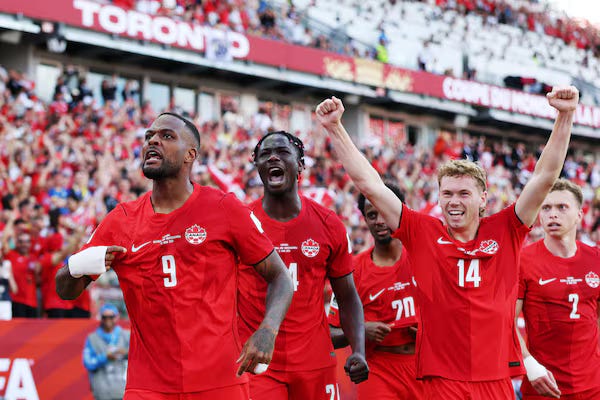
After Canada went out of the World Cup, we wrote about the success that was 2026. Now that the dust has settled, we can look forward, and Canadians can begin to set their sights on improving the association during the next cycle. Ultimately, that needs to start with becoming a top team in the Western Hemisphere. Canada can worry about getting lucky in a World Cup against European opposition once they’ve proven they can contest finals in the smaller competitions, the Gold Cups, and the Nations League.
Canada Soccer's Coming Out Party: What the World Cup Meant for the Great White North

With just four countries remaining, the World Cup is coming to an end, and the summer fling Canadians had with the beautiful game is already fading into memory.
Canada’s path to improvement needs to be thorough. The transformation needs to be both on the domestic and international levels. It needs to run from the small, to the deep foundational. All of it is important, and the task that Kevin Blue and the association have before them is massive. They cannot boil the ocean, but they can start where they are. So here is where I would look first:
Is Anybody Watching?
The simplest gap to close is to actually get Canadian soccer games on television for fans to consume. For free.
Did you know that in between matchdays at the World Cup there were eight teams playing in the quarter finals of the Canadian Championship? Of course you didn’t. That’s because the game wasn’t viewable on any sports channel that anyone actually has.
When the Major League Baseball schedule breaks for the All-Star in mid-July, there is nothing on the sports calendar in North America. Football, Hockey, Basketball, Baseball - it’s all dormant. For three precious days, men of all ages actually have to talk to their wives in the evening. This is one of several golden opportunities for soccer to take centre stage in living rooms, on phones, and on laptop screens across the country.
The inverse of this, the restrictive nature of the viewing experience, is the single greatest own-goal for Canada Soccer right now. Instead of making those games free for anyone to watch, they lock them behind a subscription service called OneSoccer. Only the most die hard fans are even aware of OneSoccer’s existence. Even the waitstaff at many pubs couldn’t tell you what it was.
When the local sports bar doesn’t carry the games, there is a major problem. To go back to July, for budding fans who might have the footy bug, World Cup fever was at its height. There were Canadian teams playing meaningful games. But if a soccer team scores a goal in Halifax, and no one is watching the game on TV – do any fans make a sound? No.
For whatever reason, the big two broadcasters in Canada, TSN and Sportsnet, do not want to pay for the rights for these games. Perhaps they feel it is too expensive. Perhaps soccer just isn’t a vertical they want to pursue. They would likely say they don’t have the games because no one is going to watch. Well, no one is watching because it isn’t on TV. Chicken, meet Egg.
On the flip side, the Canadian Soccer Association feels like they have a product worth paying for. They want to be compensated for that entertainment.
Regardless of why they lock it down though, they are sacrificing the long-term growth of the game for the short-term financial gains. Rights deals can be lucrative, but realistically, how much can they be making on Leg 1 of Athletico Ottawa vs FC Supra de Quebec? How many young fans, especially in that part of the country might have tuned in and been inspired to follow the team after watching Eustaquio score for Canada?
What’s particularly jarring is that this extends out beyond just this tournament. It extends to all the professional clubs. Watching CPL, Canada Premier League, is difficult to do. For fans of MLS teams – the highest professional division played in this country – they have it even worse.
TFC, Vancouver Whitecaps and CF Montreal are all locked behind another separate subscription service. If you want to watch MLS you need to subscribe to Apple TV. There is no other way to access these clubs. It is a nonsensical broadcasting arrangement, one which the clubs themselves likely don’t love. Between all the competitions that might happen over the course of a year, to watch Whitecaps or CF Montreal, you need three separate subscriptions: Apple TV, OneSoccer, and TSN. That works out to something like $50 or $60 a month. Why would anyone pay that when a Fubo subscription – where you get the (arguably) best league in the world, the EPL – is $15 a month? Growing the game in Canada can only happen once fans are exposed to the game. Otherwise, there is no ladder for the fan to start climbing. So, they simply never get on that ladder. They do something else that they can access. It is obvious, but that is the essence of accessibility: Access.

Canada Soccer needs to make the game free, or as free as possible for everyone and anyone to consume. That will drive interest.
This gets even worse because this trend continues into how Canada broadcasts and advertises its national team’s games. The sad reality is that most Canadians only become aware of the national team in the lead-up to the World Cup. They treat it sort of like the Olympics – “Oh, that’s something I pay attention to for fun once every four years.”
But Canada Soccer is not the Olympic men’s hockey team – Canada plays games throughout the year, every year. The World Cup is simply the crown jewel of a rich tapestry of international play. But to look back at 2025, the exact moment that Canadians should have been building their peak hype and awareness, a year before hosting the World Cup – TSN only carried one of six Canada Soccer matches. Only two of those games were even played in Canada.
Again, Chicken, meet Egg.
How will anyone care, if they don’t already, and you don’t make it easy for them? Without access, it won’t even occur to most people that they could care. Beyond access, it is an awareness problem.
Canada Soccer needs to stop gating itself. It needs to be as welcoming as possible for new fans. As it stands, they are asking for people to pay a premium for something that they don’t even know exists. In countries like Portugal, any national team match is on RTP (their version of the CBC). The national team is a point of national pride, and it’s a big reason why soccer is the most popular sport in Portugal. Portugal only has 10 million people in it, but they are considered contenders at every tournament they enter. They know something about how to promote their game and incentivize fans to care. “Caring” leads more people into the ecosystem. Those are seeds that need to be planted.
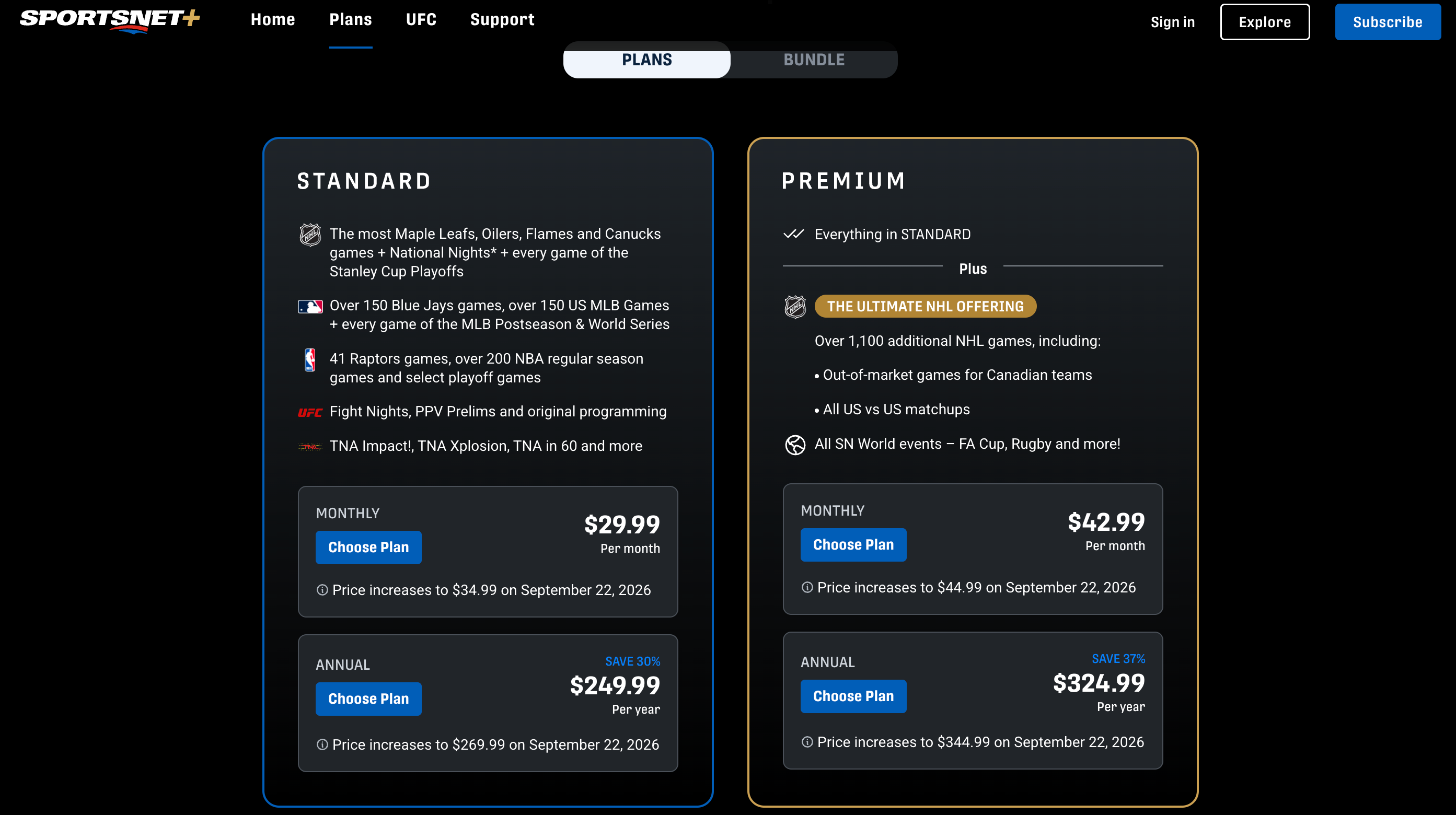
What’s more, in the age of YouTube, with freemium everywhere – this is so glaringly obvious. There lies another glaring opportunity: with the departure of Hockey Night in Canada as a CBC mainstay, this kind of product is exactly what needs to fill the void on Saturday nights. There is tremendous potential here. Small operations, like Canada Soccer, the Canadian Premier League, and the PWHL, should be all over this primetime slot – begging to give their product away to fans. It’s now $350 for a year to watch the NHL on Sportsnet+. Canada Premier League Side Halifax Wanderers has an entire season’s worth of tickets for that price. The CBC and CBC Gem are still free for Canadians. Make it happen.
Beyond CONCACAF and the Gold Cup
One particular set of free games that need to exist are the Nations League games, as well as the Gold Cup. Canada already qualifies for these competitions every year. If they want the program to be competitive globally, they need to start playing more regular competitive matches against competitive programs. So, Canada Soccer needs to do whatever it takes to get a regular spot at the Copa America. The Copa, as currently constructed, has sixteen teams. There are only ten countries in South America. Canada (as well as Mexico and the USA) should become permanent parts of Copa America until further notice.
The Copa is the third biggest tournament in the world. Becoming a mainstay of it will immediately give Canada some legitimacy as a footballing nation, especially if they can have some legitimate success. Running up against Guatemala and Haiti is not going to do that for them. The best players oftentimes don’t play during Nations League or the Gold Cup, because there is no cachet. Canada would field its best possible side at the Copa.
Canada was able to attend the 2024 version ahead of hosting the 2026 World Cup. Moving forward, competitive Canada games against tough competition like Uruguay and Argentina are far more valuable than friendlies against Tunisia and Iceland.

Making a Rivalry Between Big Brother & Little Brother
In addition to the Copa, there is an obvious and golden opportunity available for Canada Soccer – a new initiative with their rivals to the south.
The proposal would be to start a yearly competition with the US — you can call it the 49th Parallel, and play it in border towns like Detroit. Or you can always host it in the fall and battle over whose Thanksgiving is the correct one. Call it the “Turkey Bowl”, or “la coupe Dinde”. No matter, Canada should be going toe to toe with the Americans in a competition with hardware on the line. Every year.
Fans respond well to staples, patterns, and flagship events. A “friendly” with the Americans, an actual trophy on the line, would do wonders for Canadian pride, and give some real stakes to the competition. These “derbies” are the bread and butter of rivalries within towns in Europe. Canada and the US should establish this new tradition and repeat it every year. This could be reworked or extended to include Mexico as well. Maybe they can leverage soccer as a path to free trade.

Major League Soccer and the CPL
While Canada needs to be ramping up its competition on the international level with the Americans, many have started to believe there is an inevitable breakup on the way between Canada and MLS. This is a controversial opinion, and would be difficult to do, but it is likely for the best. Major League Soccer is moving to a winter schedule – Toronto and Montreal can’t realistically host home games in the winter. Vancouver is on its way to getting sold. There is tremendous smoke around the rumours of Las Vegas. The writing is on the wall.
20 years ago, when Canadian teams joined MLS, the Canadian Premier League didn’t exist. It does now. So here is a natural receiving ground for these clubs.
TFC, CF Montreal, and Whitecaps FC should leave MLS and join the CPL.
Paul covers many angles about that debate. One he doesn’t touch on, however, is that MLS suffers from the North American sports parity disease.
European league football thrives in part because of exceptionalism. The whole system of player transaction and movement is designed to move talent to the biggest clubs. For Canada, an analogue would be moving players from places like Winnipeg, Quebec City, and Brampton, to the bigger clubs like Vancouver, Montreal, and Toronto. From there, promising young players go international. The club system is superior. It is an ecosystem that creates a niche for all types of players. It is an escalator up and down. There are pathways for teenaged players to come up via grassroots initiatives, mature into talent, and climb the ladder. Then, when they are winding down their careers, oftentimes these legends return home, finishing out their final playing days with nostalgia. They leverage this into real ties to the local clubs and communities, jobs in the sport, ambassadorships, and mentorship for the next generation.
Parity, despite what Gary Bettman might think, is not a desirable outcome. It certainly isn’t the way to grow your league into a mainstay. Again, to use Portugal as an example: In any given year, there are realistically only three teams that can win the league title. Counterintuitively to the North American mindset, this is actually healthy.
This reality removes the fan’s obsession with unattainable championships. In the NHL, there are 32 teams but only one can go home happy. That is sometimes referred to as “ring culture”. Ring culture leads to load management and no-stakes regular seasons. That’s why the NBA tried to invent the in-season tournament.
In Europe, domestic teams will play in multiple competitions. They will have opportunities for relegation and promotion. There are regional trophies, and there are massive rivalries because there are plenty of matches with actual stakes.
Portugal punches way above its weight in international competition. They are seen as global giants, but their population is a quarter of the size of Spain and Argentina. They are successful because their system incentivizes the right culture, structure, and mindset. Canada can do the same: it can set the culture.
The Long Game – Culture
Culture is what needs to be the driving goal for Canada Soccer. The structural solutions exist. CPL can be the only Canadian league. TFC doesn’t have to be locked behind Apple TV. As Sportsnet continues to try and paywall gate the NHL away from the masses, there is a massive opportunity for smaller enterprises to fill the gaps. That is the opening that comes with consolidation. You need the right culture to act as a counter (counterculture) to the mainstream. That’s how Pepsi gets in line with Coke.
Soccer clubs in Canada have the ability to capitalize on another huge driver behind the sport’s success: community. The big four sports (Football, Hockey, Basketball, Baseball) just don’t have the institutional habits of building this kind of local infrastructure. There are not really any established academies except for in soccer, because any recruits just end up in a general draft. There are no junior programs. Those programs provide meeting grounds, and they can provide a vector to build strong communities.
When the community is strong, the participation and its success follow organically. Another benefit of shedding ring culture’s obsession with championships is that the primary objective of fandom changes. A feeling of belonging becomes the main event – not just wins and losses or playoff runs.
The North American sports franchise model cannot work as constituted for soccer in Canada. The fan culture and infrastructure just doesn’t exist yet. It is like hockey in Arizona, or baseball in Montreal. Once a team is out of its competitive cycle, the fan support completely dwindles, and understandably so: the leagues only incentivize winning.
Canada Soccer, and Canadian Soccer as a movement, has the opportunity to think differently. It can reimagine what the culture of the sport is in this country. It can go a different way. It can make itself accessible.
Canada is a country of immigrants. We have some of the most amazing talent, sourced from all over the world. Our nation has some of the greatest wealth. We could be supreme in soccer. But in order to ever really be a global giant, we will need to completely transform the way we look at the sport. Canada Soccer can take advantage of this confluence of conditions. They can make the game accessible for everyone. They can build the main events. They can change the culture. It’s up to us where we go from here.
Canada Soccer rights including Canadian Championship are on OneSoccer because nobody paid over 30 years. It costed Canada Soccer $1m/yr in production costs.
Pre OneSoccer, prelim round Canadian Championship matches like from July weren't shown. Canada Soccer would self stream matches. Pre OneSoccer, about 50% of Canada men/women friendlies and early round WCQs weren't shown. Pre OneSoccer, no World Cup qualifiers for men/women youth teams were shown. So, we're in the golden age of live match coverage for Canada Soccer properties.
OneSoccer is available on Fubo which has 2 of the top 3 most watched footy leagues in Canada. It's also available on Telus tv. It will be available soon on Rogers Xfinity tv due to a recent CRTC ruling. Then likely Bell Fibe.
In the past year, OneSoccer has exchanged national team match rights to get 1 CPL match/week on TSN along with free ad time for Canada Soccer/CPL sponsors. 34 Canadian team MLS matches/year are on TSN - way more than casuals watch given the low viewership numbers.
This also assumes trad tv and watching live matches on tv remains the main driver of discovery/fandom. For youngest 3 generations, it isn't. Most don't watch live sports on trad tv. Main drivers of soccer fandom in this century in Canada have been World Cup qualifications (Olympic medals for women), EA FC, socials, star players, playing the sport and Youtube. It's why kids today know more about soccer than boomers. It's why kids today wear jerseys from clubs around the world. It's why they know about transfer markets and pro/rel. Online access including streaming was the spark driving interest in the sport for younger gens.
In a world where everything is available at anytime you want, being on CBC doesn't people will watch. It has less than 5% share of tv viewing as viewership has dropped 60%+ in the past decade. TSN/SN have lost about 50% of their subs in the past decade. Average age watching CBC is over 65 and over 55 for TSN/SN - not the groups that will grow the game. CBC Gem has even less engagement than CBC tv (but it is at least growing marginally).
90% of club football is already on streaming services. Now national team tourneys are moving over. 2027 and 2031 Women's World Cup will be on Netflix in Canada. Men's World Cup could also go to a global streamer as rights are expected to jump 2-3x.