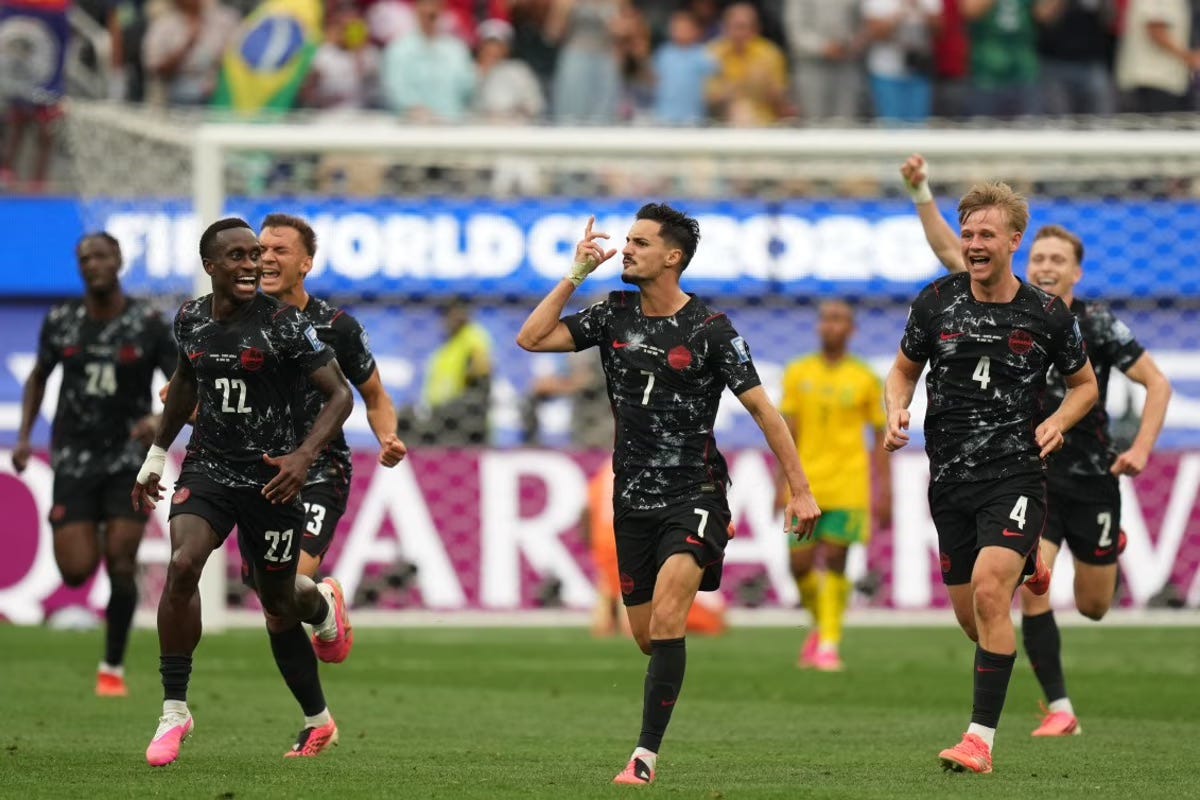
With just four countries remaining, the World Cup is coming to an end, and the summer fling Canadians had with the beautiful game is already fading into memory.
As mid July gives way to the dog days of summer, and with hockey training camps just over the horizon, most Canadians will forget about football. But before we move on, before we get our hopes up about Conor McDavid, Nick Suzuki, or Auston Matthews, it’s a perfect time to take a look at the state of the union of the men’s national program. What exactly did hosting (part of) a World Cup mean for this country? Was it worth it in the end?
In time, with a fond nostalgia, history will look back on this tournament as a resounding success for Canada soccer. The most optimistic Voyageurs might have been disappointed that their team went out in the last 16 against Morocco - especially so given Canada’s first half performance. But with the perspective of a little time passed, we can see the context of this program’s run in 2026. Coach Jesse Marsch may have been right, “we’d rather be us than them”.
By the time they bowed out, Canada was without their three best players, Schrodinger’s Alphonso Davies (hamstring), Qatari casualty Ismael Kone (broken leg), and the hollow performance of Jonathan David (just plain awful). Beyond that, the Canadians were playing hurt with key players compromised due to injury: Moise Bombito, Promise David, and Stephen Eustaquio. Then there are the two omissions of Sam Adekugbe (remember him?) and Marcelo Flores, who missed the tournament entirely. Altogether that is eight cards short of a full deck. Fans can see that Canada was far from the height of their powers during USA ‘26, and they can dream on about what might have been.
Despite all the obstacles though, the team redefined the conversation on what a successful men’s program can look like in the great white north.
Ahead of this World Cup, feckless Canada had been anemic on the global stage. They had never even tied a World Cup match, let alone pick up a full three points. They had a grand total of zero wins, zero ties, and six losses. This record had been complemented by scoring a meagre two goals in those six matches, (one of which was an own goal), while conceding twelve.
All of those ghosts are now banished. The glass ceiling pressures are remnants of the past. Canada have won a World Cup game, crushing Qatar six nil. They were victorious in a do-or die knockout game, a hard fought match against a resilient if not mundane South African side. They overcame the pressures of hosting, and grew into themselves after tying it late vs a Bosnia & Herzegovina side playing with house money.
The only two games they lost were to two quarterfinalists, Morocco and Switzerland. Neither of those teams were truly threatening to take home hardware, but both sit comfortably within the upper echelons of world football. For stretches, Canada was the superior side in both defeats.
With Canada’s breakout and arrival on the world stage, we can contrast them with their neighbours to the south. Prior to ‘26, even calling themselves little brother to the United States or Mexico might have been charitable. Those two nations hardly think about the rouge et blanc at all.
The Americans and the Mexicans have forever been the giants of CONCACAF. Those two behemoths have dominated the confederation’s landscape for a century. The USA and Mexico qualify for the World Cup with regularity - and it is a national crisis in DC and Guadalajara when they do not.
Yet, despite these augmented standards, neither country has had any bonafide success on the world’s biggest stage.
Canada’s modest achievement of reaching the last sixteen falls just one win short of matching the zenith of both American and Mexican achievement at the World Cup.
Over the hundred years since the tournament began, those two countries have a combined two wins in the round of 16 or later. Humble Canada therefore, with its harsh climate and relatively tiny population is punching above its weight.
While Canada was breaking new ground in Toronto, Vancouver, and Los Angeles, its two main rivals were unable to take any kind of meaningful step at this World Cup.
Both Mexico and the USA expected to be quarterfinalists on home soil.
Particularly delusional USMNT supporters were convinced that the trophy would stay in New York until 2030. As it played out, the US crashed out after a paltry performance against Belgium.
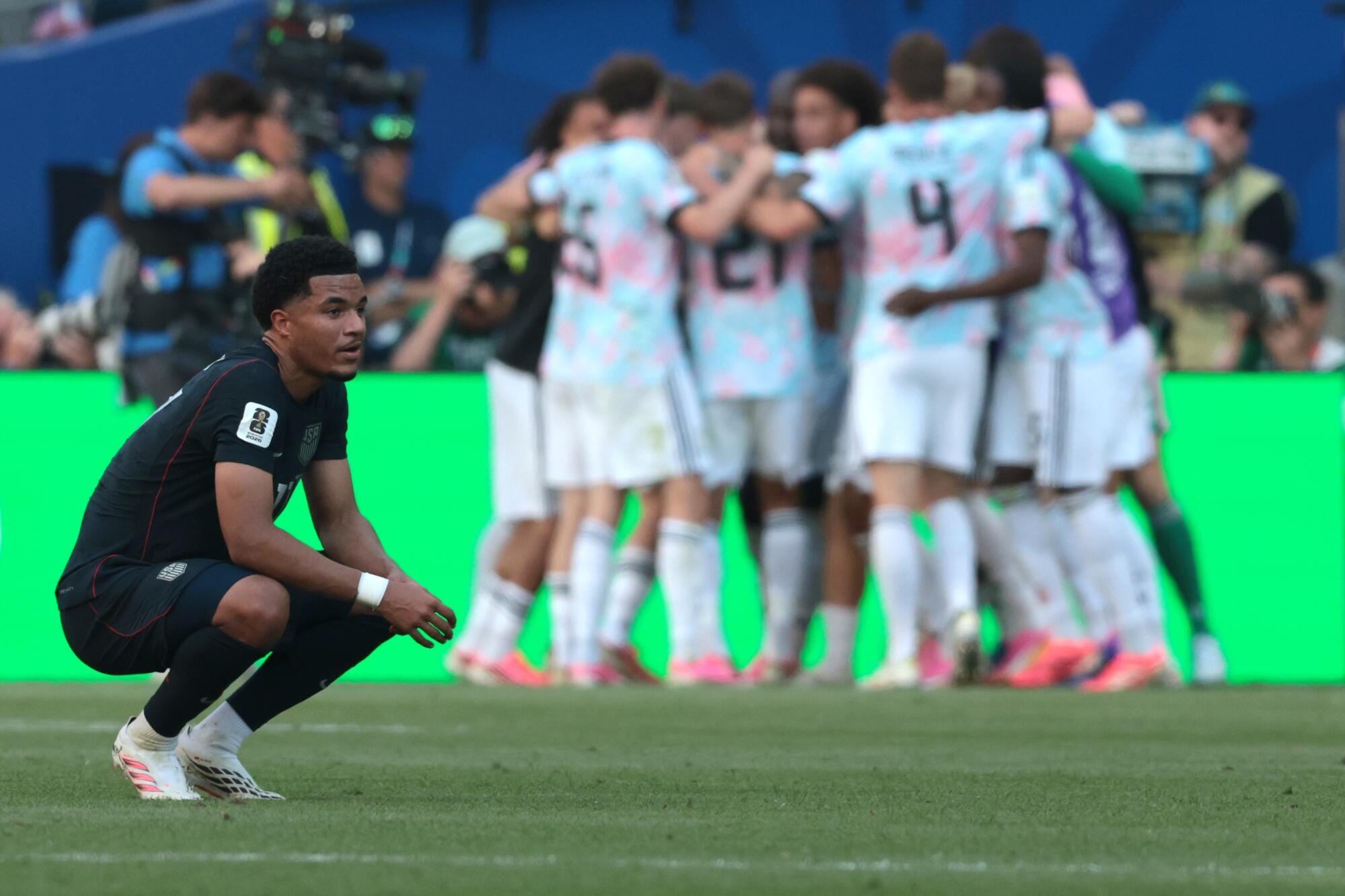
For the Mexicans, despite their very best efforts to channel the worst of the CONCACAF dark arts, Mexico could not muster a win at the storied Azteca when it mattered most against England. Even being up a man for half a game after a red card was shown to Jarell Quansah, El Tri were unable to banish their round of sixteen demons.
For Canada, the round of sixteen was paradoxically both a minimal expectation and a resounding success.
Expectations at this stage must always be moderated. None of these mighty European nations have won the World Cup: Netherlands, Croatia, Portugal, or Belgium. There has never been a champion from North America, Africa, or Asia - no country from any of those regions has ever even contested a World Cup final.
As a matter of fact, since the tournament in France in 1998, of the 32 final four spots, only 15 countries have produced a semi finalist. It must be kept top of mind, that while Canada is improving, so are Spain, France, England, and Argentina.
So achieving eternal glory by winning a world championship should not, and frankly can not be a reasonable goal. Without that heavy weight of expectation, we can redefine the bar of success. Any pressure that might have been present is suddenly released, and Canadians can instead focus on the process. That process though has significant shortcomings.
Ultimately, Canada is an immature footballing nation. The domestic league is amateur. Top sixteen at a World Cup was a pipe dream less than a decade ago. Every aspect of Canadian football has potential to improve in quality. The players, the team, the management, even the supporters need to be better.
But they also need to relish this moment. They need to enjoy the journey for what it has been and what it will become. Any win at the World Cup should be cherished. Any goal should be celebrated. When you frame 2026 this way, the tournament was a tour de force.
With an immature program, it must be said that Canada has a sometimes immature coach. Despite that criticism, Jesse Marsch remains the correct choice to lead this group.
Candidly, Canada is not a top side. There is no tactical mind on earth that can remove the physical limitations of aptitude. They are lightyears away from beating a side like England.
Canada can however, begin to slowly close the cultural gap between them and the premier footballing nations. England as the gold standard is the destination for global football. It is its zenith. The biggest clubs in the world are in London, Liverpool, and Manchester, and British culture often revolves around football and footballers. The consequences of that social calculus is that if a player is eligible and talented enough, they will do whatever it takes to take the field, sing “God Save the King”, and represent England.
That limit may never be reached, but Canada needs to continue to orient itself toward England as true north. The national team needs to establish a good name and build a strong reputation. It needs more young talent dreaming of singing “We stand on guard for thee”.
If those measures are the top incentives, a bombastic manager that is an expert recruiter and a motivator of men does need to be the priority. Growing the game and the program within Canada, despite all of its growing pains, is the most suitable path forward.
The way the Canadian squad responded to the injury of Ismael Kone speaks wonders about what Marsch, and John Herdman before him, have been able to achieve. When those players speak about brotherhood, it is not hollow platitudes. International football, we must be reminded, is not the players’ primary vocation. This is essentially their side hustle.
Marsch, for his part, absolutely deserves criticism for many of his choices. His bizarre handling of not disclosing Alphonso Davies’ availability, his unyielding loyalty to Jonathan David, and the puzzling timing of his substitutions are all legitimate questions that demand answers.
Changing any of these details however, would not suddenly morph Canada into a serious contender. Canada Soccer’s shortcomings are far more foundational than one man choosing the team while he gleefully pumps his arms on the sideline.
The trend as it stands is that Canada Soccer is ascendant – so why would you consider changing the coach?

The sad reality of Canada Soccer’s ascendance however, is that it is occurring despite itself. Historically, the CSA is an awful institution. Recently, under intrepid CEO Kevin Blue, the organization is starting to turn things around. They are slowly improving. But there is a tremendous amount of work that remains to be done.
Rome was not built in a day, and the lengthy list of change candidates demand attention. There are too many to tackle in one cycle, but Blue and his brain trust have to start somewhere. So as a partner article to this one, in our next edition we will examine some of the lower hanging fruit. In that examination, we will dig into what Canada Soccer fans should be looking towards, hopeful of, and respectfully demanding over the next qualifying cycle.
In the meantime though, we should pour a cold one, light a cigar, and savour the positives in Canada’s coming out party.
They should now be considered a mainstay of the beautiful game.