
Who Won the War in Iran?
To suggest Iran is winning requires fully ignoring among other salient facts, that the supreme leader is dead, its new Ayatollah is reportedly incapacitated, its military leadership has been eliminated, and its own civilians still don't have internet access. We're supposed to call that victory?
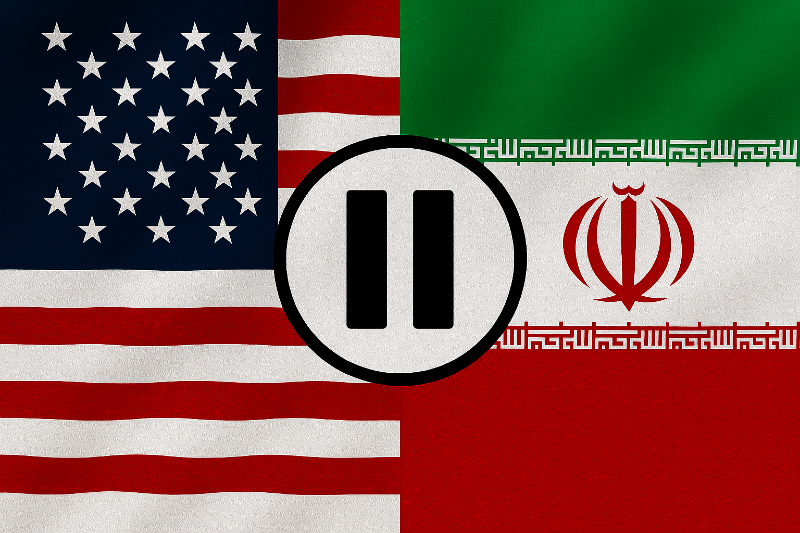
Hit Pause: The War in Iran Is Not Over, and Iran Has Not Won
If you pay attention to media in the West right now, two fundamental premises are being bandied about. The first: the war in Iran is over. The second: the United States has clearly lost. This line of thinking has snowballed, fuelled by hatred for the president. But before we publish any more op-eds about how we are living in the age after the American empire, let's take a breath: Because I don't see how this war is over, or how the US has lost — except perhaps on the grounds of reputation.
A Ceasefire Is Not Peace
As of Tuesday night, there is a ceasefire in place. However, when a war ends, there is typically a negotiated peace or a surrender. A ceasefire is not that. It is an agreement to stop shooting at each other for a set period of time. The ceasefire in place hasn't been clearly established, with conflicting views on whether or not Hezbollah and Lebanon are included. Indeed, both Israel and Hezbollah continue to fight to the chagrin of much of the world. The ceasefire is two days old, and already violated. Meanwhile, the Strait of Hormuz is still effectively closed. Only Iranian allies are getting through.
Most notably, nobody is officially saying the war is over. But it's being covered as if it is, which is a remarkable editorial choice that most major outlets are taking. We only have to look back at the Hamas-Israel war to see how fragile these pauses can be. Both sides reposition, rearm, and prepare for a resumption of hostilities — this happened repeatedly throughout Gaza, and with Hezbollah and Israel before that. It is now standard for the Middle East, a region famous for its inability to agree on anything for very long. We should also remember that most analysts would say that Iranian proxies ultimately lost those wars, even when they appeared to be winning before ceasefires were announced.
The Demands Are Miles Apart
The most clear signal that this war is not over is the enormous gap between what Iran is demanding and what the United States has put on the table. Among their ten point plan, Iran wants enrichment rights, a full US withdrawal from the region, permanent tolling rights over the Strait of Hormuz, and war reparations. The US is demanding no enrichment, free international navigation through the Straits, and restrictions on Iranian proxy activity. These are not close positions. These are diametrically opposed — and for either side to prevail, the other has to fundamentally capitulate.
Pakistan is hosting negotiations that are just getting started. Using the Hamas-Israel war as a template, there were endless rounds of talks where the parties weren't remotely close - and the war didn't end until Hamas essentially surrendered, with Israel conceding only on secondary points. The media is covering this as if both sides are quietly converging. They're not. The gulf is still enormous.
What the Media Is Leaving Out
Iran is being declared a winner by outlets while they omit some rather significant facts. Iran's war-making capabilities have been substantially crippled. They've been firing salvos at Israel, seemingly trying to hit whatever they can. The US and Israel, by contrast, have been conducting targeted strikes - eliminating Hezbollah's command infrastructure, taking out Iranian political leadership, and killing the majority of Iran's top military brass. The Ayatollah is dead.
Perhaps most significantly underreported however: Iran made a major blunder and attacked countries across the region. Qatar, Bahrain, Kuwait, and others - nations that had been trying to stay neutral, are now crystal clear on what Iran thinks of them. Israel and the US on the other hand, attacked none of them. The bottom line is those countries now have a very clear picture of who the regional threat actually is. Israel, by contrast, looks like a capable and reliable protector. That's a major geopolitical shift that is barely being discussed.
Trump, TACO, and the Circular Logic Problem
US military assets remain fully deployed. Fifty thousand troops. Two carrier strike groups. Twenty warships. If Iran doesn't engage seriously in Islamabad, the leverage to re-escalate is intact. Yet, still, Iran has been declared a victor.
The reason this keeps getting missed is that media vitriol toward Trump has become a lens that distorts everything globally. This is what is sometimes called Trump Derangement Syndrome. To be clear, this is not praise of the president or his methods. It is simply an acknowledgment that hating someone and finding them grotesque, doesn't make them an idiot. Trump being chaotic doesn't mean he is wrong. This man is constantly underestimated by the globe. He was supposed to get crushed by Hillary Clinton. Kamala Harris was being touted as a clear winner until November of 2024. Trump has twice been elected to be the most powerful person on earth. Yet we still underestimate his resolve. We forget, he likes to win.
Then there's TACO: Trump Always Chickens Out. The idea that Trump makes threats and then never follows through. This again is a fundamental misreading of a deliberate strategy. Start at an extreme, land in the middle, and it looks like a retreat. It isn't. It's how he gets more than he gives. Just look at the recent run of global affairs. NATO defence spending is way up. The tariffs everyone said he'd never impose are in place. He ended the Gaza War and got the hostages home. The US has managed to pressure NATO and Canada into significantly enhancing their military presence in Greenland and the north. TACO is a narrative, it's pretty funny, but it's not serious analysis on global affairs at least. President Maduro would likely testify to the same.
Finally, there's a logical contradiction at the centre of the "US lost" narrative. The argument goes: 1. American power has degraded. 2. The proof is that the US was supposed to beat a backward place like Iran in a war. 3. Trump lost, so now US power is diminished and the American empire finished. But that's circular — the conclusion is the premise.
Either American power was already in decline before this war, in which case Trump didn't cause it and no US president was ever going to win cleanly. Or it wasn't in decline, in which case killing the Ayatollah, the IRGC chief, and most of Iran's military leadership is a strange definition of losing. Winning a war is a result of military capability and influence. It is not the cause of it. Soft power, at some point, needs to be leveraged. There's a lot of leveraging still on the table - so let's not declare the American goose cooked before they've gone all in.
Hit Pause
The US is certainly losing one battle: the one over its reputation. The vast majority of the media is reflexively anti-Trump and unhinged tweets are low hanging fruit. It is farcical. Meanwhile, Israel's operations in Lebanon are compounding global condemnation towards them. The narrative continues to swing.
But to suggest Iran is winning requires fully ignoring that the supreme leader is dead, that its new Ayatollah is reportedly incapacitated, its military leadership has been systematically eliminated, and its own civilians still don't have internet access. We're supposed to call that victory?
The negotiations in Pakistan this weekend will be consequential. If the US walks away and cedes the region, history will certainly record an Iranian win despite catastrophic losses. But that outcome doesn't exist yet. It is baffling that it has become the primary narrative.
What is more likely, given every pattern the Middle East has ever shown us, is that the ceasefire fractures, both sides reposition, and a second round begins with a different set of facts on the ground.
The war is not over. Even if it were, Iran did not win it. That conclusion is wishful thinking, it's the geopolitical equivalent of calling the game at halftime because you want a particular team to lose.
Hit pause for now. Let's not declare winners before we have a result.

Comments ()