
Why Things in Toronto Keep Getting Worse
Toronto City Council voted 21-4 to ban ICE from the World Cup in the city. There's just one problem: they were never going to be there anyway.
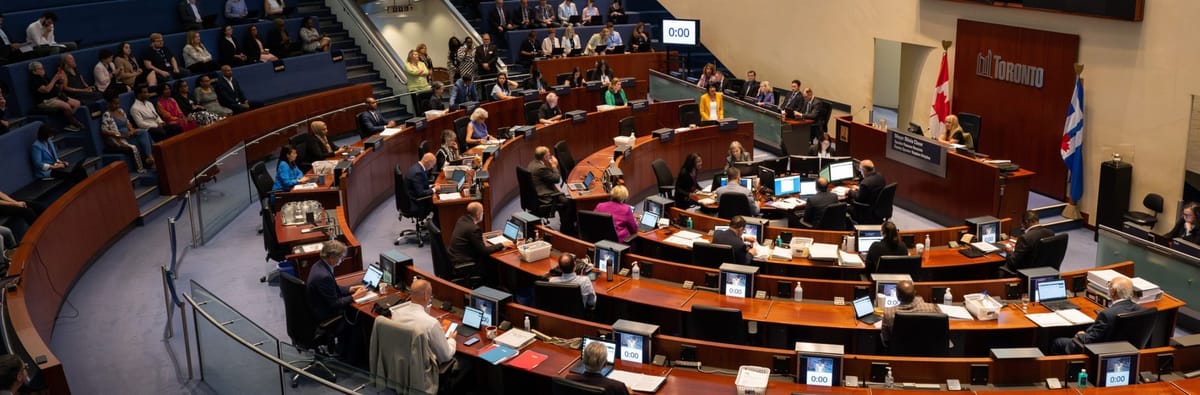
Canadians are known for being really nice. We give people the benefit of the doubt. We trust in our institutions. We are slow to anger, to say the least. The same qualities of being nice and trusting can lead us into a state of paralysis. It's not until someone starts threatening our sovereignty that the majority of the population starts to really pay attention to politics.
You see it clearly in Toronto voter turnout. Last year, when the spectre of American influence galvanized us, voter turnout was sky high at 69.5%. This is not the norm at all however. In the 2022 municipal election for example, just 29.2% of eligible Torontonians cast a ballot — the lowest turnout since 1974, and less than half of the 60% who showed up in 2014. Provincial numbers aren't much better.
This is because most of us don't see a clear link in how our voice actually makes a difference in the city we live in. People care about Toronto, but there is very little knowledge of what actually happens at City Hall. There is therefore no clear consensus on what is going wrong.
There is consensus though, that just about everyone agrees the city has been in decline over the last decade. When we examine why, we start to notice a key trend that reared its ugly head once more this week at City Hall.
To be clear, the city has no deficit of legitimate issues to wrestle with. Affordability, safety, and transit chief among them. But yet again, while council could have been spending its time wisely, they chose to focus on a motion with no real relevance: banning ICE — the infamous United States Immigration and Customs Enforcement agency — from the World Cup in Toronto.
While the vast majority of people in this city likely agree with the statement "I don't want ICE here in Toronto during the World Cup," it simply didn't need to be said. It's irrelevant, and it deliberately misleads people into thinking there is a risk of a foreign government sending its people here to... do what exactly?
Their methods aside, ICE exists to remove illegal immigrants from the United States. Hopefully the mayor and her colleagues know that as of the writing of this piece, the 51st state proposal is not a realistic possibility. We actually have our own agency tasked with managing our border, Canada Border Services Agency. No mention of them however, so council doesn't seem to be concerned about immigration enforcement in Toronto.
This motion is just about as absurd as banning any other foreign law enforcement agency — the French Army, perhaps, or the IRGC. German stormtroopers? Or maybe Imperial ones?
The rational conclusion therefore is that this is pure political theatre. Designed either to signal a point, or to stoke fears that some repressive agency is en route to oppress Torontonians. It is wasteful at best and cynical at worst — and after watching the mayor's PR video, the latter seems closer to the truth.
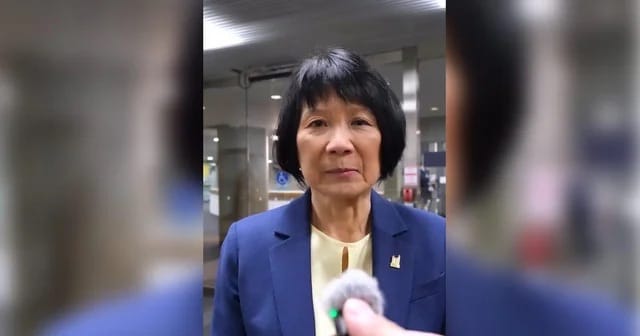
There is no credible reason to expect ICE or any foreign power to be operating on Canadian soil during the six soccer games played in Toronto. There wasn't even a threat or a rumour. And even if there were, that would be a federal matter entirely outside the mayor's jurisdiction.
We can tell this motion was unnecessary because the same thing was attempted in Vancouver, where it was rightfully dismissed as being out of order. Yet the ideologues here managed to waste valuable taxpayer time and money on the very same matter.
If it were just once, perhaps it could be forgiven. But this mayor and her councillors have been engaging in performative politics for years while the city slowly but surely declines. While our residents suffer, council spent time and millions of dollars renaming Dundas Square. Now, they are suing constituents for selling Dundas square T-shirts for charity. They also insist that each and every meeting kick off with lengthy land acknowledgements that, while well-intentioned, rob the city of time that could be spent solving the issues that affect the Indigenous community most disproportionately: drug addiction, homelessness, and poverty.
The irony this week was particularly sharp. While council roiled about an imagined ICE invasion, the city was facing its very real gridlock. There was a streetcar derailment Thursday morning causing delays across five routes during rush hour. Over the weekend, entire portions of the subway are shut down to commuters for signal upgrades to ancient infrastructure. Earlier in the week, there were jarring reports of violent home invasions and stabbings on the TTC — and when Councillor Bradford put forward practical safety measures to address the crisis, he was met with indifference from entrenched colleagues who are seemingly more interested in symbolic gestures than solutions.
We must all acknowledge that while hopefully well-intentioned, the leaders of this city have simply not been effective enough to carry the mantle. A large part of that is letting ideology get in the way of good, practical governance.
When we allow this type of thinking to permeate, our public servants become unable to serve the public.
We need real change. We need to help our most vulnerable. We need to get this city running efficiently so that we can share the scarce resources we have. The stakes are too high to stay this misguided course. Municipal elections are this fall. We need to try something different, because what we have clearly isn't working.


Comments ()