
It's Time to Retire "Zionism"
Israel exists. It is a fact of life. Like death, taxes, and gravity. On that matter at least, the world should move on, and we would do well not to engage in rhetorical battles we have already won.
** This piece debuted in the Times of Israel on May 14th, 2026. You can read it here: https://blogs.timesofisrael.com/its-time-to-retire-zionism/ **
They say that Israel is never allowed to win a war. Jews generally, it would seem, are unable to ever claim public victory. But if we examine history, we can see with clarity that we are more than capable of being winners. None of these wins was more important than 1948.
Think beyond just the war of independence. Jews were finally victorious in an ideological and political battle that had been waged in Jewish prayer and custom for thousands of years: The restoration of a Jewish state in the land of Israel. The realization of the Zionist project.
Zionism (it seems we must constantly be reminded), in its most basic form, is simply the right of the Jews to have a state in their ancestral homeland. By those terms, the movement fulfilled its mandate. It won. So let’s stop dwelling. Let’s retire the word “Zionism”.
It is no longer useful.
Zionism is unique in that there is no other political movement still using aspirational language so long after it succeeded in its goals. Take for example the absurdity of using terms like “universal suffrage”, “abolition”, or even “prohibition” in 2026. Those movements, successful or not, have had their debates settled. Those are past-tense issues. In the American context, Prohibition was settled in the US in 1933. Just 15 years before Israel was established. Then there is a movement you’ve likely never even heard of: the Korean Independence movement. Which concluded with the establishment of the Republic of Korea, in 1948. There are very few people in the world who know enough about Korean independence to debate the dates, political motivations, or efficacy of the movement. But that’s exactly the point: the debate is settled. Despite its relationship with its northern neighbour, South Korea exists.
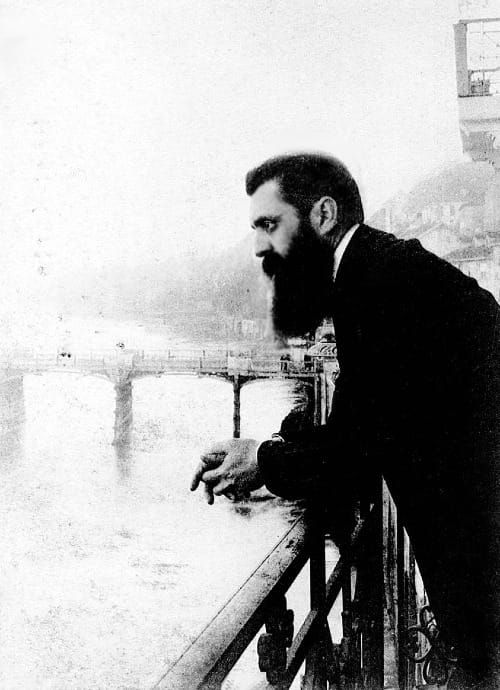
Unlike these other political ideas, the key differentiator is that the term "Zionist" has been hijacked by enemies of Jews worldwide. A cursory look at a site like Wikipedia will show you just how toxic the word has become. The definition you find there bears little resemblance to what Herzl intended - it has been rewritten, contested, and poisoned in real time by people who want the question of Israel's legitimacy to remain permanently open. We cannot fight the editors fast enough.
This is not at all theoretical. When I recently told a non-Jewish friend that “of course I was a Zionist”, she told me in hushed tones, “Isn’t that like being Hamas, but the other side?” That is where we are. No amount of education or Jewish pride will turn the tide on this matter in the global public square. There will always be a large contingent of hostile actors online criticizing “Zionists” as evil, as colonial oppressors, and then retreating behind the phrase “Anti-Zionism is not antisemitism".
This act of mental piracy, (raiding, pillaging and then hiding), is the fulcrum for why the Anti-Zionism discussion is so maddening to those of us still wanting to defend the term. Technically speaking, Anti-Zionism is not antisemitism. There is a legitimate logical Judo move there. A person can love Jews and believe a Jewish nation state is not a good idea. Of course, there is almost always alignment in the Jew hating Venn diagram between antisemites and Anti-Zionists.
Speaking of antisemitism, for its own reasons, there is already much discussion and effort to phase that particular term out. “Jew hatred” and “Anti-Jewish bigotry” are starting to circulate, but they suffer from the same fundamental flaw: being non-inclusive of Israel. For me, the clear path forward is to start using “Judeophobia” as the term of choice.
While contemplating this idea, I came across a past version of this debate. Alana Cooper and Sharona Hoffman, writing in the Jewish Telegraphic Agency in October of 2024, argued something very similar in "For the sake of Israel, it's time to retire the word 'Zionism'." Zack Bodner published a response in the Times of Israel Blogs a few days later.
Two years on, we can revisit the exchange. In my estimation, Cooper and Hoffman were right, although their conclusion is perhaps misoriented. We shouldn’t retire the term “Zionism” just for the sake of Israel, we should do it for the sake of Jews everywhere. “Zionism” is like the star athlete with several championship rings still playing ball well into their 40s. We should let the term enter the hall of fame and call it a career.
So what’s next then? Where do we go after fighting for this term’s soul for so long? For starters, we can look to the product of Zionism for direction: While not a monolith, Israelis use the term far less than diaspora Jews. It is already becoming archaic within the Jewish state, while it still holds as a central term in diaspora discourse. As an Israeli friend of mine put it, "It's kind of a phased out word. When we talk about love for Israel, we use the Hebrew word for nation — Le'om."
Thus, nationhood or peoplehood, seem to me to be the best path forward for describing love and support for Israel. As in, support for Israel isn’t Zionism, it is a commitment to and manifestation of Jewish peoplehood.
While nationhood is understandable by the world over, peoplehood is a bit more specific to Jews. It speaks to and covers the diverse set of ideas, experiences, skin tones, religiosity, and political views. Within the homeland, and without.
Outside of Israel, the narrative is being rewritten by enemies so that the State of Israel is suddenly in question. They want to revive the Zionist debate. This is disingenuous: no serious person would ever start a movement debating whether other countries have the right to exist. The Judeophobe (think Homophobe) will surely adapt. They will find another angle of attack, a foothold to try and delegitimize the only Jewish state. No matter, this is a long dance and we must move forward with language better suited for this stanza of the struggle.
Bodner argued we should reclaim the word Zionism rather than retire it. But to what end? At what cost? When we get it back, what are we going to do with it? He might have been right two years ago, but as Israel’s credibility and support continue to erode in the west, we need to reorient ourselves. Rather than being a signal of strength, holding onto this debate is giving permission to the world to question the results of a physical, political, and ideological war that was won over seven decades ago.
They say that Israelis and Jews are never allowed to win a war. Well, sometimes we might be the ones stopping ourselves from enjoying the spoils. It's time to retire the term Zionism.
Retire it, and Anti-Zionism loses its power.
Israel exists. It is a fact of life. Like death, taxes, and gravity. On that matter at least, the world should move on, and we would do well not to engage in rhetorical battles we have already won.


Comments ()