

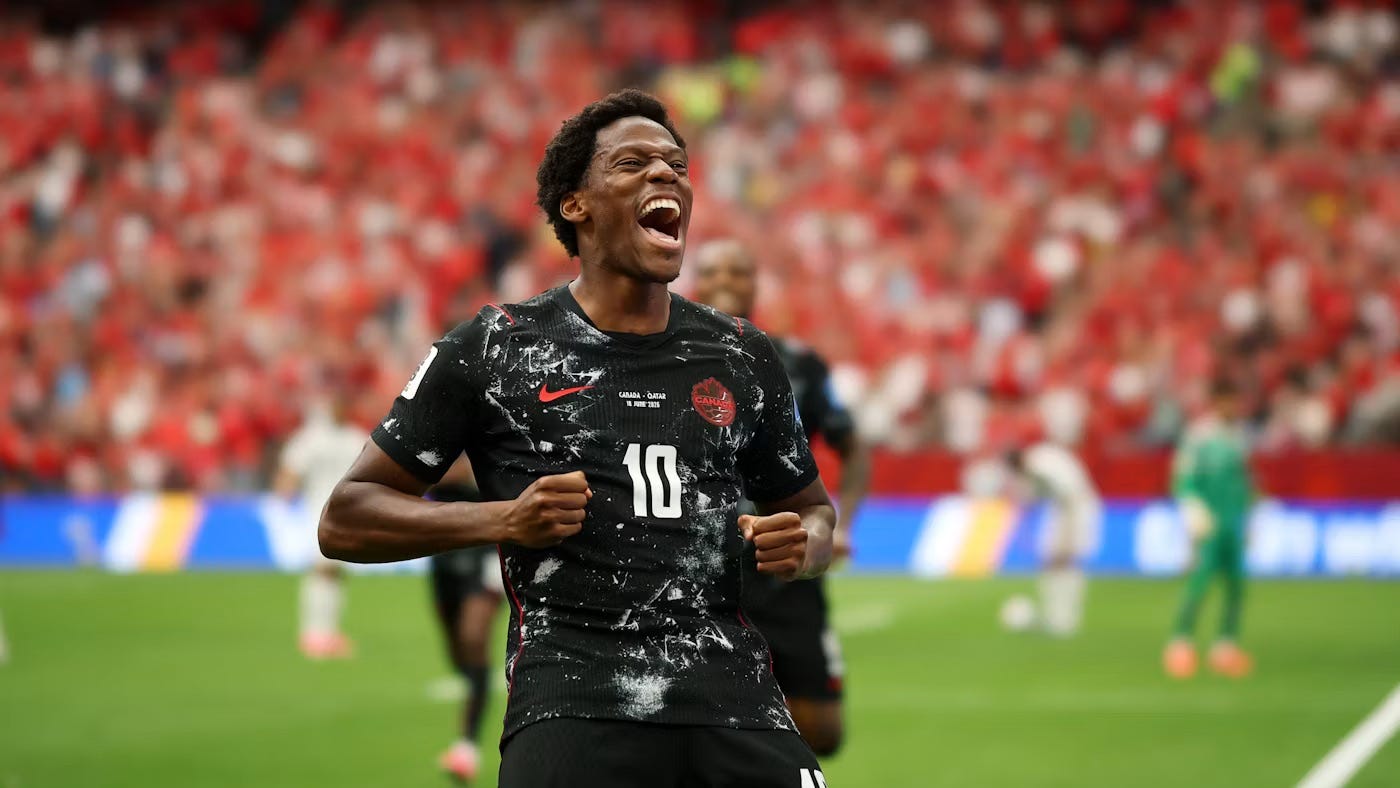
Yesterday marked the end of matchday two of the World Cup group stage. This is the tournament’s halfway point and a great opportunity to look back at the first 48 matches. It’s time to analyze what’s working, what isn’t, and what we can expect to come next.
The World Cup is Unimpeachable
Like every world cup, there was doubt and criticism being lobbied at FIFA before the tournament started. But even with all the problems, it is a guarantee that the tournament will be a success. The games are going to sell out. This will be the summer that a nation will remember for eternity. The world cup is simply the best. Football is the world’s lingua franca, this occasion is its zenith. The contenders are intriguing. There is parity at the top, and variance in the game that means a good eight to ten nations have a serious shot at glory. The World Cup’s super power is how it manages to cancel out the noise. Even in an age of rising tensions and global conflict, spectators, fans, and casuals forget about it all and gleefully watch the games. The World Cup in Qatar was great. This North American World Cup is great. The World Cup in Spain, Portugal, and Morocco in 2030 will be great too.
When a business has a monopoly like FIFA does, it is hard to parse what is working and what isn’t. But ever suggesting that a World Cup won’t be a successful endeavour is foolhardy.
A Big List
That being said, there are too many teams in this tournament. When it was announced that the World Cup would be expanded to include 48 teams, it was framed as an exciting opportunity to showcase more of the world’s diversity. From a technical perspective, it means that a strong region like South America can offer more chances for its strong teams to make it to the big stage. Prior to 2026, CONMEBOL only had 4 spots. Given that two of those were always taken by Argentina and Brazil, it meant that there was very little margin for error for strong nations like Colombia that were in tough due to their geography. This was also a major factor for Europe. Despite having the most spots in the tournament in the older format (13) some great teams were missing out. So increasing the numbers by 50% was certainly appealing.
After some experimentation, it is clear that expanding to 48 teams was too many.
The list is too big and it is impossible to follow everything that is going on. There are four games every day, too many to be able to follow the tournament holistically. It’s lovely to be able to tune in to football at all hours of the day and night, but you can’t follow the tournament legitimately. There are twelve separate groups, so even the most enfranchised fans can’t recall who is matched up with who.
For those trying to anticipate and plan for the knockouts, the third-place playoffs, make that extremely difficult and nearly impossible. There are far too many variables to predict who will be playing who in the knockouts. Because of that, a lot of the stakes are missing. Typically placing first in your group would be a huge incentive. This time around, it is no longer the case. Hopefully, that changes as the third match day finally arrives, but a country like Canada — even with two games played — has so many potential round of 32 opponents that it’s difficult for them to have any idea of what’s coming after Switzerland. That’s going to be really hard for their preparation and for fans’ investment.
The expanded fields mean that many of the matches are missable. If Jordan plays Algeria, does anyone notice? It’s wonderful for each of those individual countries — but watching New Zealand play Iran is not exactly what the world’s sports fans are yearning for.
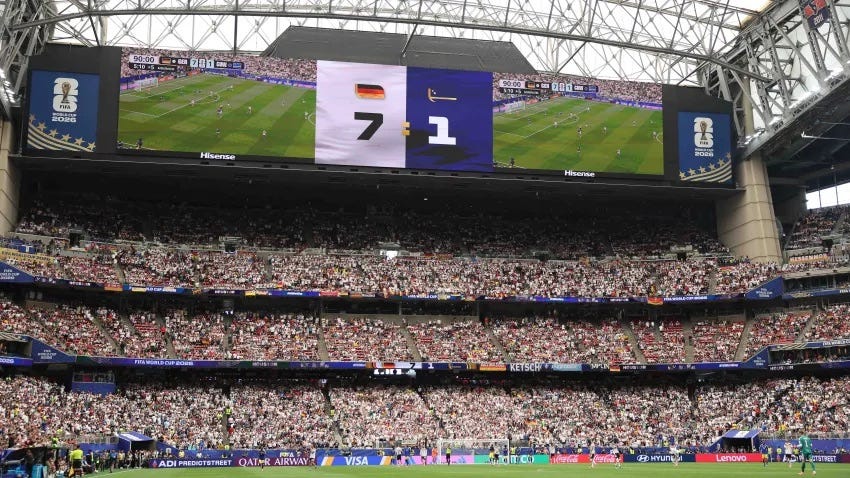
Even the games involving big teams are, for the most part, relatively uninteresting. In some sense, these big games are satisfying. Seeing football powerhouses like Portugal (5-0 vs Uzbekistan) and Germany (7-1 against Curacao) destroy their opponents is nice for fans of those teams, but what was the point of having this matchup in a tournament about the world’s best? There are always a couple of blowouts at the World Cup because one or two minnows will sneak in after a strong or lucky qualifying campaign. But there is almost one terrible team in every group now, and it has functionally compromised the stakes of the group stage. It means you’re essentially just playing for seeding — and that’s not even a big deal, again, because the path forward might be so random.
Of the 72 group stage matchups, there are only a few that are appointment viewing. France against Norway, Morocco against Brazil — these are tangibly different kinds of games than the Netherlands versus Sweden or Argentina versus Jordan. This early intrigue is the biggest loss for the tournament.
It was fun to see Cabo Verde hold Spain and Uruguay to a draw, but those surprises still existed in the old format – Saudi Arabia beat Argentina in 2022. There is blowout fatigue, poor Tunisia got destroyed by Sweden, fired their coach, got destroyed by Japan, and now they get to play the Netherlands. Goal difference matters, so the Dutch won’t be holding back. All of this has made the first three quarters of the games feel like exhibition matches for the most part.
Not all hope is lost for 48 teams, but FIFA will need to address this in how it allocates spots if they want the group stage to matter again moving forward. When they went from 32 to 48 teams, the field increased by 50 per cent. All confederations were not given the same proportional increase, so Europe went from 13 - 16, while North America also picked up three spots – grabbed by Panama, Haiti, and Curacao. Hopefully those nations are enjoying themselves, but Denmark, Italy, and Ukraine, would have been far more competitive in those spots.
Functionally, the group stage just doesn’t really matter anymore. When Portugal tied the Congo — which ought to have been a massive issue — it just didn’t matter, because Portugal and their supporters knew that as long as they beat Uzbekistan – who qualified by beating out the United Arab Emirates, Qatar, Kyrgyzstan, and North Korea, they were going to get through no matter what. If we look past the blowouts however, there have been some very welcome changes to the tournament.

The Way of the Dodo
Perhaps the greatest thing about this World Cup, is that there is far less diving, and no, it is not because Italy isn’t there. FIFA implemented a key rule change regarding injured players. If a player requires treatment from off the field (ie, medical staff have to enter the field of play to help them), that player is forced to leave the field of play and is not allowed to immediately return.
The risk of playing a man down is too great, so this has translated into a much appreciated near absence of diving and shenanigans of players writhing around on the ground in pain.
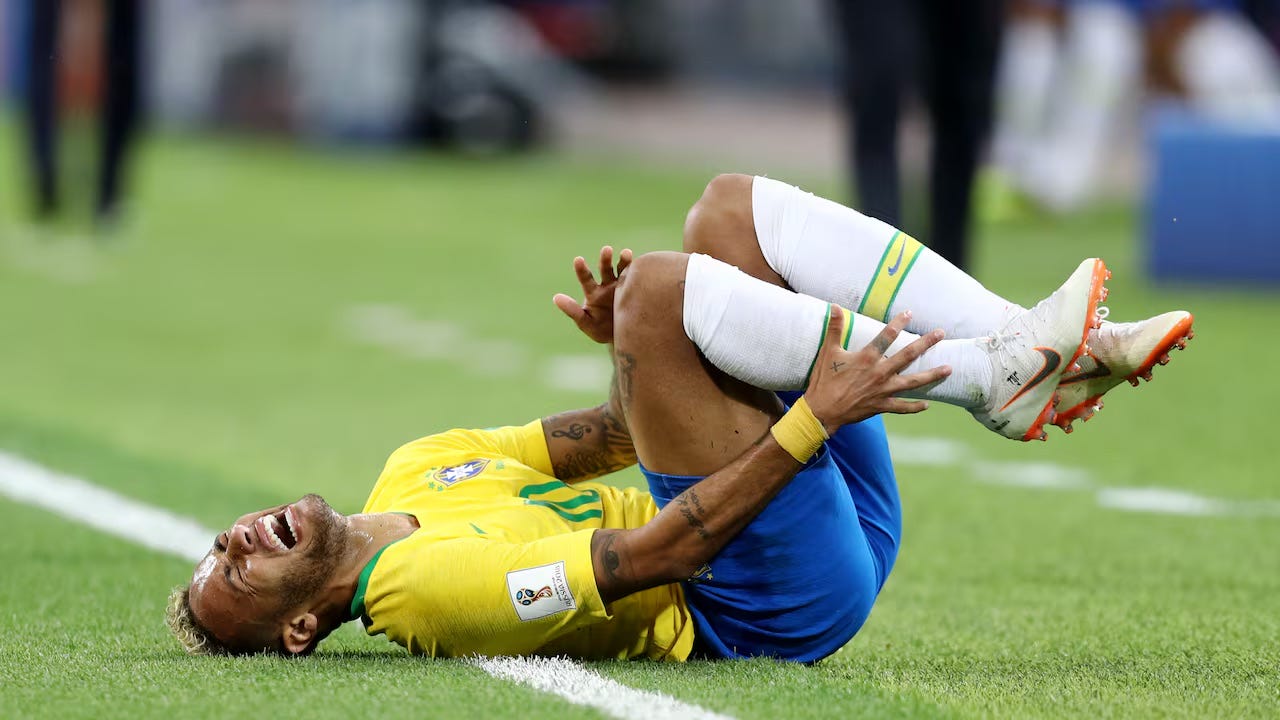
For this, we must give FIFA their flowers, this rule has tremendously improved how the games themselves are managed and played. Before this rule, players were incentivized to bait the referees into calling fouls, might as well embellish a foul - there was no downside and the opponent might end up with a yellow card. In hindsight, it suggests that a huge percentage of these injuries were acting jobs. Suddenly, footballers have learned to fight through the pain.
This deeply impacts what happens on the field. Without the rolling around, it means that there’s more actual football happening. This is an underrated reason as to why there are so many blowouts occurring. Lesser teams can’t artificially shorten the game via clock management. This has always been the downside of running time, it can be manipulated.
Most importantly, a key underrated tactic has been removed from a player’s toolkit. In past tournaments, a wily player could call timeout by faking an injury. This would give their mates a chance to catch their breath, reset, and maybe even discuss some strategy. Now, the flow of the game is much harder to interrupt by faking an injury. It will be fascinating to see if this rule comes into play during a key moment in the knockouts.
Football
Of course, FIFA giveth, and FIFA taketh away. That same flow that was much improved by the rule change, has been equally compromised in the other direction by the infamous hydration breaks.
While as a fan it is admittedly useful to have a minute to grab a beverage or run to the lavatory, these breaks are simply advertising spots for FIFA to make more money. They turn the game into quarters, which is of course fitting for Football in the USA. Unfortunately, they are a programmatic way of doing the job that embellishment did prior. They give a team on the backfoot an opportunity to regroup, gather their strength, and discuss strategy. Hydration breaks have actively limited the flow of games. This break can alleviate sustained pressure and provide an opportunity to regroup.
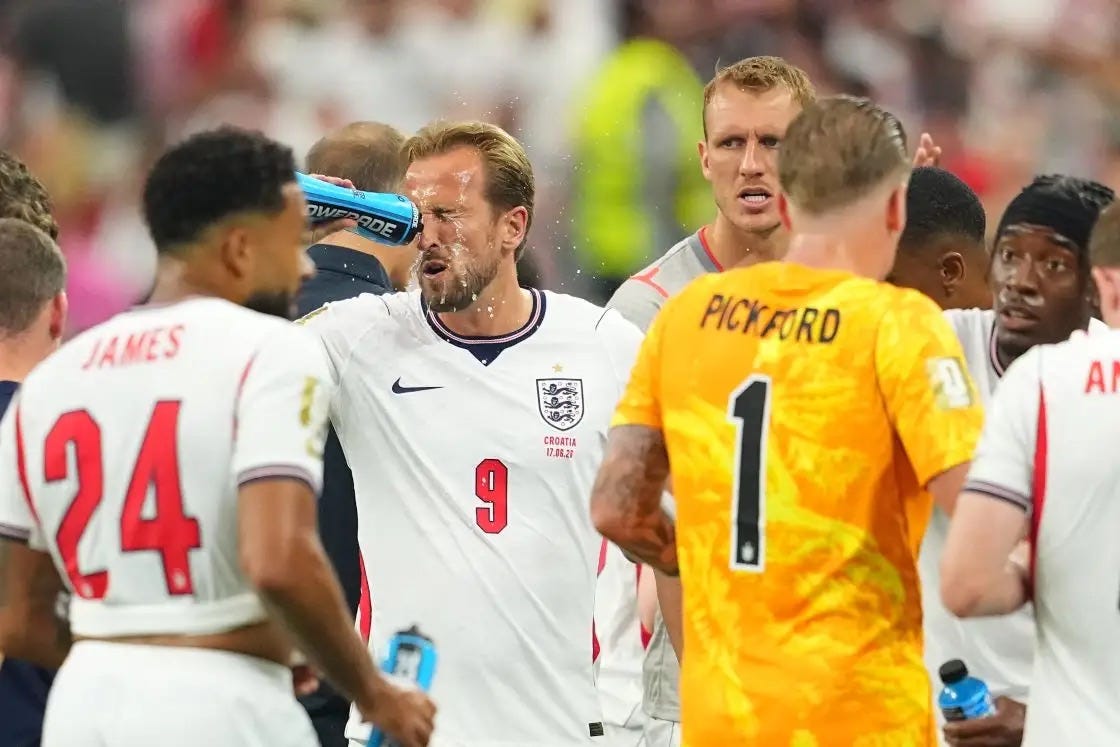
It will be interesting to see how these breaks are leveraged as the tournament heats up. Football doesn’t have time outs, so this is a new wrinkle that will allow the most tactical managers to seriously impact the game.
The best strategists suddenly have three whole minutes to switch up strategy, correct weaknesses, or motivate a flustered team. This was the case in the Canada Qatar game. After the Kone injury in the second half, the Canadians looked rattled. After the hydration break, they returned focused and purposeful.
There will surely be a knockout game where a team turns the tide after a hydration break. Managers better have contingencies in place - not a skill that many would have exposure to.
Attending the opening Canada match in Toronto, the hydration break allowed me to spend a few moments appreciating the experience. A valuable few minutes given how expensive it all was.
Pricing Problems?
It costs an arm and a leg to attend any game at this tournament, but the pricing, to FIFA’s credit, was largely right. As a personal anecdote, I ended up winning the ticket lottery and had seats for all three of Canada’s group stage games. I only could afford to attend one, so I chose the opening match against Bosnia. That match was priced at three times what the other two games cost. At match time, the prices dipped, but the 3x cost was not too far off from what the tickets were actually worth on the resale market on match day.
The other two games were more complicated. Against Qatar, Canada was coming off a draw, momentum hadn’t really arrived yet, and it was difficult to move those tickets. I considered myself fortunate to offload them a few days in advance for precisely what I paid for them.
A week out from the tournament, the match vs Switzerland was similarly risky. I sold at a small profit to a friend of a friend, but hardly the haul I was hoping for by reselling. Once Canada beat Qatar however, those prices went through the roof. A day before the match, and the cheapest ticket online was 2x what I had paid. The resale game is not for the faint of heart.

For most North Americans, there is real sticker shock. But when presented with this once-in-a-lifetime opportunity, many have simply pulled the trigger and paid up. There likely will never be another opportunity to see Canada play a World Cup match at home as an example. People remain willing to pay top dollar for unique live experiences.
Now, It Gets Interesting
With the last group stage matchdays upon us, intrigue is on the horizon. Canada for example has a lot to play for in their final group match. Once the groups are settled up, the tournament will really get going. Over the course of three weeks there will be 31 win-or-go-home matches. There will be upsets, heroes, legacies forged, frustrating penalty shootouts, and heartbreak.
In the end, it will almost certainly be one of those top 10 teams - a European giant, Brazil, or Argentina. Just like it always has been. In the meantime, FIFA will make their money, the enterprise of global football will continue to forge ahead, and we’ll all miss our bedtimes watching Paraguay play Australia.