The Word We Need Is Judeophobia
Prominent Jewish thinkers have gone through three long years of hard thinking on semantics. I think most of the work is great. The process is great. The conclusion is wrong.
So simply put, I will back off and fall in line with “Jew Hate” if you can answer me this:
If anti-Zionism is not antisemitism, then why is anti-Zionism de facto Jew hate?
Here’s the logic, and it’s good logic: our understanding of this thing has evolved, and the language needs to evolve with it. You don’t keep using the 1950s definition of a word after you’ve learned something the 1950s didn’t know. And what we’ve learned, post October 7th, is that “antisemitism” can’t hold what’s actually happening anymore. Antisemitism means racism against Jews. Specifically Ashkenazi Jews. Ie, the race. Anti-Zionism, whatever else it is, is not technically that. So when someone says “I’m not racist against Jews, I just hate Israel,” they’re not lying about the dictionary. They’re right. And that’s the trap. That’s the fundamental reason these brilliant thinkers are suggesting we change the vocabulary.
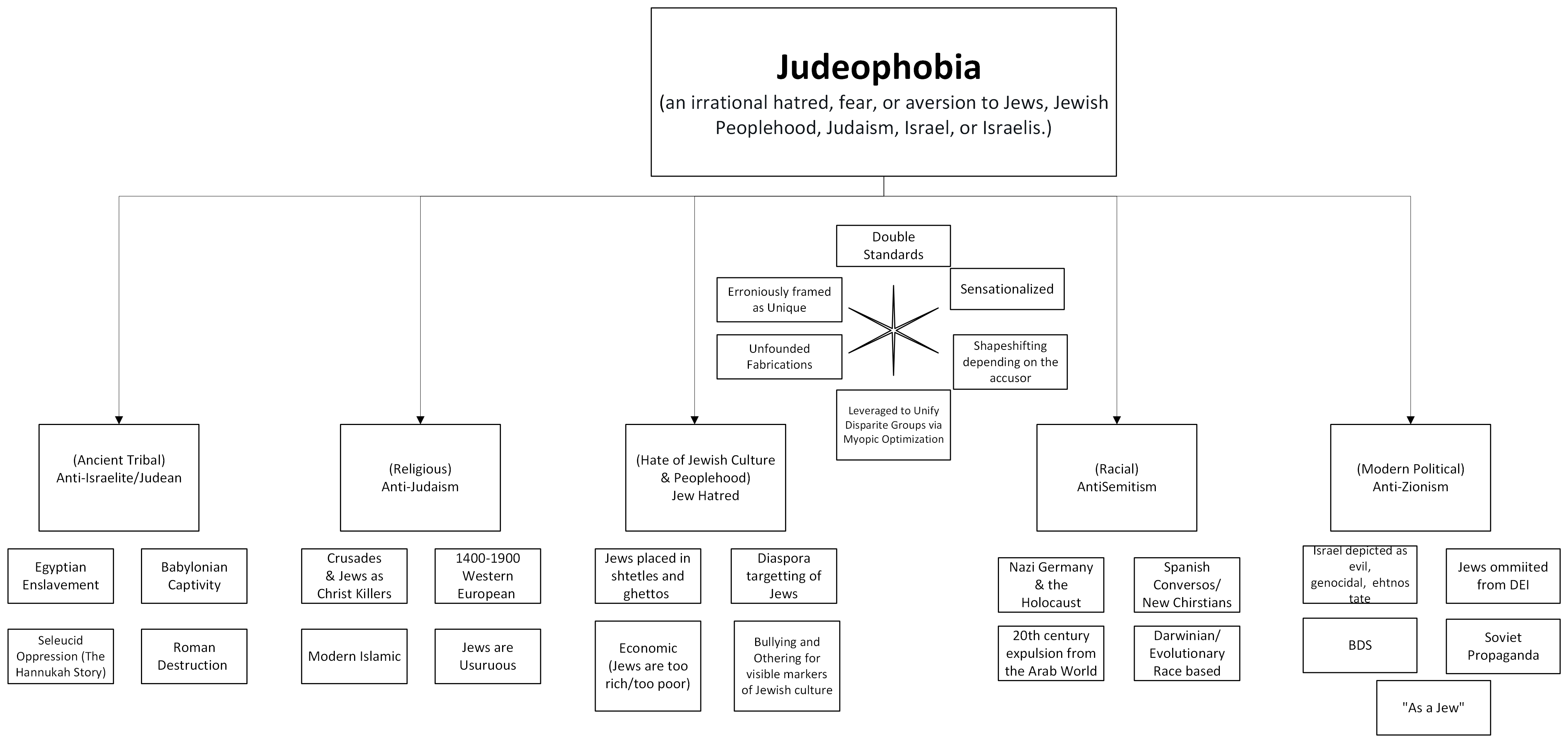
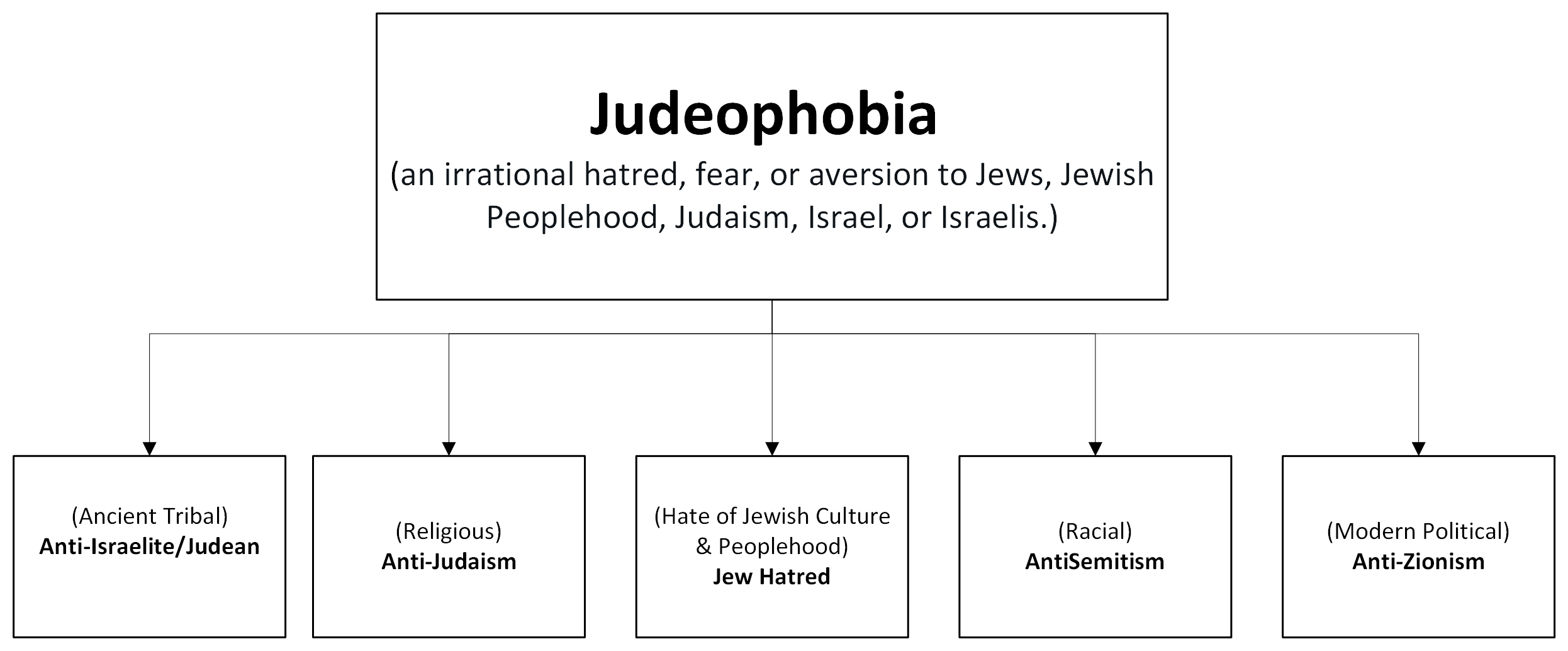
To close the trap, the people building this model — and I want to be clear, I think they’re right about everything else — went looking for something underneath. A root cause. A single current of discrimination against Jews running under the surface of history, throwing off different symptoms depending on the century. Blood libel in the Christian era. Anti-Judaism in medieval Europe. The forced converts in Spain, watched for centuries in case the conversion wasn’t real. Then racial antisemitism, which is the version we’ve mostly been dealing with for the last hundred and fifty years. And now, the theory goes, anti-Zionism. Same virus, new symptom. (As a matter of fact, I would contend that anti-Zionism goes way back and started much earlier — anti-Zionism, or an aversion to the Jewish state, is an old habit. The Romans had it. The Babylonians had it. They wanted to destroy ancient Judea. They succeeded.)
I think all of this is almost right. But it comes to the threshold and then takes a sharp turn.
Anti-Zionism is a hate movement. Yes, for sure. It is a double standard, etc etc, no argument there. What I’m asking is the question I opened with, and after asking many smart people, I have not gotten a satisfactory answer. If anti-Zionism is not antisemitism — and by the model’s own logic, it isn’t, that’s the entire reason we needed a new word in the first place — then why do we think we can treat it as de facto Jew hate? We cannot painstakingly build the case that the old term needs replacing or an evolution because it’s too narrow, and then turn around and pour the exact same old meaning into the new one. Pick one. Either the category has changed, or it hasn’t.
You can love Jews and want Israel to not exist. It is possible to say “I love Jews. I want Israel destroyed.” Both sentences can be true at the same time, held by the same person, with no contradiction between them. You might think that’s an insane position — I would tend to agree it is at the very least incredibly misguided. It is certainly uninformed. But it is not necessarily hateful.
You can, for example, love the story of the Palestinians so much that you don’t think Israel should exist. That doesn’t mean you hate Jews. Uninformed and wrong isn’t the same as hateful, and if we keep treating them as synonyms we are going to lose the argument to the first Jewish anti-Zionist we come across.
Now, most of the time? Sure. Seventy, eighty percent of the time, when you pull back the anti-Zionism, there’s a person underneath who just hates Jews and found a more respectable coat to wear. I’m not naive about that. But “most of the time” is not “always,” and a model that only works most of the time is a model with a crack in it, and everyone — especially the Jew haters — eventually finds the crack and exploits it.
And here’s what happens when they find it. Some percentage of anti-Zionists genuinely, sincerely do not hate Jews. So you call them a Jew hater anyway, because the model says the underlying cause is always hatred, and they say: no, I don’t. Now what? Have you ever tried accusing someone of hating something they insist that they don’t hate? It is not a good way to win an argument, and it is a spectacular way to lose one, because now the entire fight is accusing them of evil. Of being hateful. Venomous. Of loathing a population they do not know. They’re not going to change their mind about Israel. You have handed them the exit and you have pissed them off.
I don’t believe that someone who does not think Israel should exist is automatically working from opinions based in hatred. I think most reasonable people, when they dwell on this idea, will come to that same conclusion. I think that anti-Zionist person is working from a theory. A wrong one, in my view. But a theory has a logic to it, and for many, hatred is not part of that.
I suspect we picked the term “Jew hatred” because it is evocative. It feels really good to simply say that someone who hates Israel hates Jews. And they probably do — but they don’t always, and that is so important. It is a trap that we are setting for ourselves because we are hurt. But we would do well to be specific and not make a rash decision.
Otherwise our leaders are going to start accusing a lot of people of hating Jews. That is strictly an escalation, and while it does feel good, it feels true, and oftentimes it is, it is not in line with our values to punch like this. To insult. No — the correct path is to have empathy for those who are misinformed or ignorant. Not to call them hateful if they are not coming from hate. That will win us no friends. That will in fact make the problem worse.
So if hatred is the wrong word — too precise, too easy to disprove with a single sentence, and inflammatory — what’s the right one?
Judeophobia.
Judeophobia: the irrational fear, hatred, or aversion to Jews, Judaism, Israel, or Israelis. It’s built to hold the whole range without breaking the first time someone hands it a counterexample.
Not hatred. Phobia. I mean it the way it is already understood by the entire Western world. We already use the suffix to great effect and success. Sharp thinkers will retort: “Phobia doesn’t work because it means afraid.” Well, homophobia doesn’t mean “fear of gay people.” Homophobia covers the spectrum. Yes, someone who hates gay people. But also, someone who is just afraid of what they might do around his kids. Or who feels homosexuality is strictly immoral for no reason other than it disturbs their psyche.
That’s not hatred, necessarily. That could be fear. It is certainly an irrational aversion. It’s a double standard applied. We didn’t solve homophobia by saying all homophobes hated gays. We kept one word big enough to hold fear, aversion, discomfort, and yes, sometimes hatred too, all under one roof. That’s why the term works. That’s why it stuck. Islamophobia did the same thing, for the same reason. It is working incredibly well. Islamophobia is perhaps a tired term. It certainly invokes some eye-rolls, but it is highly effective. We should take a lesson from our Muslim cousins.
Judeophobia, as “Jew hatred” intends, does what antisemitism can’t anymore. It covers the person who genuinely, unambiguously hates Jews. It covers the person who doesn’t hate Jews at all, loves Judaism, has Jewish friends, and still finds something icky about a Jewish state existing that he wouldn’t find icky about literally any other state on earth existing. That’s not hatred. That’s a phobia — an aversion he can’t fully account for, that only ever seems to land on one people.
Finally, Judeophobia lets us retire “self-hating Jew,” which was always a strange and cruel phrase anyway. A Jew who doesn’t believe in Israel almost never hates Jews. What he has — and this is the far more useful diagnosis — is internalized Judeophobia. The same phenomenon everyone already understands from internalized homophobia, applied to a different population. Nobody’s shocked when a gay person absorbs the culture’s aversion to himself. We shouldn’t be shocked when it happens to Jews either. I am twenty thousand words deep on that particular topic right now — the “self-hatred,” what I call “internalized Judeophobia,” doesn’t typically come from hate.
So what does this mean for “Jew hatred”? Rather than being the underlying cause, Jew hatred is to me better suited to be another modern manifestation of the same underlying root cause. It is the evolution of antisemitism. Jew hatred is to the Jewish people what antisemitism was to the Ashkenazi Jews of Europe. As our understanding of Jewish peoplehood has returned to just that — Jewish peoplehood — thus has Jew hatred emerged. It is a real thing and it is a real problem. But it is not all-encompassing.
Ultimately, what I am saying is that we have picked the wrong word here, and we are setting ourselves up for failure. Because Jew hatred as a term has the same incompleteness as antisemitism. I know it feels good, but feeling good is not going to win any arguments. Jewish thinkers have been doing tremendous work on this, but I think we are making a mistake. We got the ball to the one-yard line and then, at the very last step, we handed the whole argument back to the other side, for free, by insisting the new territory was hatred. All someone has to do is say the one sentence that’s technically true.
“I don’t hate Jews. I just hate Israel.”
Fine. You might not hate Jews. But you certainly have an aversion to them. You might be afraid, you might be comfortable with an irrational double standard. That is Judeophobia.