
Missing Medals
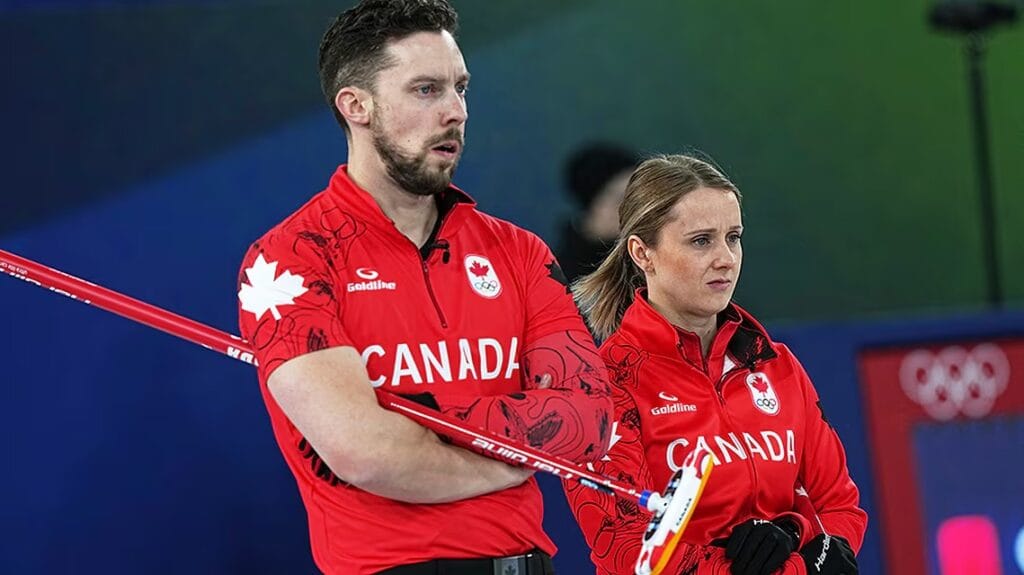

Fourteen, Ten, Ten. That’s the number of Olympic Winter gold medals Canada won in 2010, 2014, and 2018 respectfully. Halfway through the 2026 winter Olympics and we’re trending towards two.
So it begs the question, what gives: what happened to all the gold medals? We’re a winter country after all, so aren’t we supposed to be winning a bit at the winter olympics?
Well, perhaps it’s bad luck, Mikael Kingsbury lost a tiebreaker for a gold (before winning Canada’s first in 2026) for example. There is always variance at play, but aren’t we supposed to be a titan of cold weather sports? We can rationalize it as just being a bad week, or a down year. But when we look at 2022, the oft forgotten NHL player-less COVID Pyeongchang Olympics Canada finished with a grand total of.. four golds. A heavy decline from our past status.
Once could be bad luck, but twice is a trend.
Our lack of winning (sometimes referred to as losing) is the effect of two major challenges. The practical, and the cultural.
Practically speaking, the results are rooted in budget and policy. They are symptomatic of a country that either can’t or won’t prioritize spending in the field of athletics. Our former prime minister liked to advertise that Canada was a post-national state. While the Carney government has moved away from that rhetoric, Canadian national pride is still trying to recover. Furthermore, Canada isn’t a healthy enough economy anymore to target dollars towards athletics like we used to.
Canada spent 50 billion on debt interest this past year, and that makes it difficult to allot anything to the bobsled team. When our economy is stalled to the point where our government decides to stop collecting taxes on Christmas gifts, then of course we are going to lose sight of nice-to-haves like Olympic golds.
The lack of winning is the logical conclusion of set policy prioritizing other things. It’s clear as we had winning set as a policy in the leadup to the Vancouver games. Canada had a policy called “own the podium” that was funded by our federal government for 2010. The tailwinds of that investment informed the continued success over the decade that followed.
Of course, we can all have extremely fair criticisms of the Olympics. Countries should not be measured based on their athletic prowess… but as far as useless indicators of which countries are ahead, it is in fact indicative. We are a small country, but we are part of the G7 – and we are supposed to be operating on the same level as those first world powers.
We are smaller in population, but of the G7 countries (Italy, France, Japan, US, Canada, Great Britain, and Germany) we are definitely the coldest. So with that as our focus, we should be competing at the very highest level.
The warning signs have been there for years, a quick google search will find you dozens of articles of athletes sounding the alarms about the lack of funding for their sports. The lack of funding is indicative of a sick financial ecosystem. Athletics are a luxury. They indicate an excess of power. This is the reason why third world countries and developing economies don’t medal very often. If we aren’t prudent financially, then the extras like gold medals inevitably disappear.
The bottom line is that Canada hasn’t increased funding since 2005 (the own the podium era) so it’s no coincidence that we haven’t excelled. Inflation on the other hand has increased about 50% since then, which represents a significant decline in spending on athletics.
Alongside policy and finances, there is the organizational piece of the puzzle. Canadians have a well documented history of avoiding good centralized planning with victory as the key goal. Hockey fans for example see how sophisticated the American pipeline has become while Canadians still rely on talent and our best athletes choosing to play Hockey. Without strong governance and planning from an organization like Hockey Canada, the Canadian pipeline becomes a hunger-games style individual contest. You see that in Canadian performance at the World Junior championships, or when perusing the list of available Canadian goalies.
Then there are the cultural aspects. It just isn’t in our nature to put a high level of import on the pursuit of individual excellence. That sort of sentiment needs to be manufactured, groomed, and nurtured. This has many overlaps with how we look at government funding and organizations. Canadians are becoming more and more dependent on the state. The public sector has grown at twice the rate of the private sector since 2014. Government jobs have a reputation for being a safe place to land. Where achievement and accolades aren’t perceived to be part of the institutional culture. When this becomes normalized and incentivized, it starts to influence the broader culture. This invariably overflows into aspects of success in business and enterprise, along with their close cousin in success; sport.
Ultimately we must reckon with the most fundamental question: do we care anymore about being the best? In sports, or in anything? Or is this yet another vertical upon which Canada is conceding the ground to other, more ambitious nations?
And look, maybe all this doesn’t matter that much. It’s just sports after all, and realistically none of us are going to be watching even 5 minutes of Skeleton, biathlon, or Moguls for another 4 years. But there nonetheless is value in having your country win gold at the Olympics. The morale and motivation it bestows upon the population yields benefit. Those wins build national unity at a time when multiple provinces are having actual discussions about separation.
Seeing a Quebecois figure skater, a hockey player from Nova Scotia, or a curler from Alberta achieve at the highest level matters. It’s the sort of thing that gives you proof that a national project is working. That sticking together on the basis of our shared values is worth it. It might even make some of our crankier citizens feel better about their province’s equalization payments.
Those young athletes are out there representing us, the Canadian average Joes. They are wearing the maple leaf on their chest. They are giving us the rare opportunity to feel proud of one another, and that should not be overlooked. It is extremely affirming that a young person from a small town in Canada (yes, Canada!) can be the best in the world at something.
That sort of positive sentiment is contagious. Winning is contagious. Momentum is contagious.
When our athletes win, it does make our citizens walk a little bit taller. Those citizens start to believe in themselves. They start to think that maybe they too can achieve something great. That mindset flows through and manifests in culture, family life, and the economy.
It helps solidify the myths we tell ourselves about why being Canadian matters at all. It gives us a positive reason not just to be the 51st state.
So yes, the Olympics matter, winning medals matters, and sometimes being the best matters. These competitions are there to make us feel something after all. There’s no better example than this CTV montage from the end of the 2010 Vancouver olympics:
https://www.youtube.com/watch?v=vX_dndXEGHI
If we’re interested in feeling that way again, then pursuing winning is a choice we can make.



Comments ()