
Power and Control: The State of the Iran War
The U.S. has demonstrated unmatched military power, but are there limits to what that power can actually achieve? Matthew Pollishuke explains the state of global affairs at this critical juncture in the war in Iran.
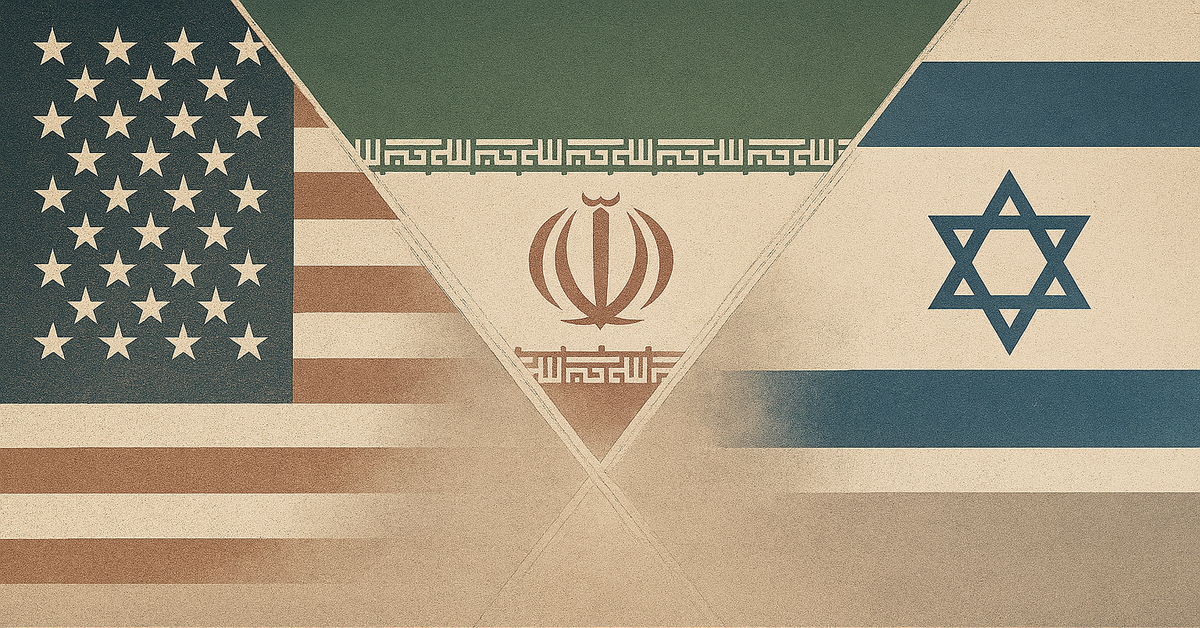
The Iran War has not lacked military clarity. What it has lacked is an answer to a much harder question: after so much force has been applied, who is in control of what happens next?
The United States: Superior Force, Diminishing Control
The United States has reaffirmed its status as the world’s leading military power. It has demonstrated its ability to project force at great distance with a degree of coordination and intelligence integration no other military could plausibly match. Iran’s air defenses and naval forces have been severely degraded, and significant elements of its senior leadership have been eliminated. No other country could have achieved military success at this level.
Yet the war has exposed a growing gap between military capability and strategic success. Iran’s ability to disrupt the Strait of Hormuz imposes costs that airpower alone cannot neutralize. Even limited interference has produced energy price volatility, shipping insurance shocks, and supply‑chain instability. While the U.S. economy remains comparatively resilient, the broader global impact has carried real domestic consequences. President Trump’s political base is showing cracks, and public tolerance for additional escalation may already be approaching a breaking point.
President Trump’s stated desire for rapid disengagement further reduces U.S. leverage. When escalation is politically undesirable, threats lose credibility. President Trump’s stated desire for ending the war is now widely understood, not only by domestic audiences, but by adversaries as well. That visibility has implications. Iran can reasonably conclude that time works in its favor, increasing its leverage in negotiations. With polling showing the President underwater on the war, the administration faces limits on how much additional force it can credibly threaten in pursuit of concrete objectives. Short of committing ground forces or pursuing regime change, both options carrying severe risk, it remains unclear what form of escalation would compel Iranian capitulation rather than merely prolong the conflict.
Bottom Line The United States retains overwhelming strike power, but economic damage, domestic political limits, and escalation risk increasingly restrict what that power can achieve.
Israel: Near‑Term Security, Long‑Term Political Risk
Israel has achieved significant security gains by dismantling Iran’s regional network and constraining its ability to project power. Hamas has been severely degraded, Hezbollah’s operational capacity is reduced, and Syria is largely neutralized as an operational front. Israel has also meaningfully disrupted elements of Iran’s missile and nuclear programs.
In the short term, these outcomes materially improve Israel’s security. If the conflict were to end today, Israel would face fewer immediate threats than prior to October 7th. That improvement, however, has come at a clear diplomatic cost. While the October 7th attacks initially generated broad international sympathy for Israel, that support was first strained by the war in Gaza and then further eroded by the current conflict. Diplomatic tolerance has narrowed across much of Europe and the Global South, leaving Israel increasingly reliant on a shrinking set of partners, most notably the United States.
The longer‑term picture is more complex. Israel’s battlefield success has coincided with a steady erosion of U.S. public support. Declining approval among Democrats and independents is well documented, but more strategically consequential is the softening of Republican support. While Republicans still remain broadly supportive, pro Israel sentiment has fallen compared to pre‑October 7th levels. There is concern as fatigue sets in and internal divisions deepen, particularly among younger voters.
In the near term, U.S. policy is unlikely to change. Security assistance, intelligence cooperation, and diplomatic backing remain strong. Over a 10–20 year horizon, however, the erosion of bipartisan legitimacy matters. Elite support without durable public backing becomes increasingly fragile as leadership turnover and voter coalitions evolve.
Bottom Line Israel secures exceptional near‑term safety but faces longer‑cycle strategic uncertainty as its most reliable political foundation narrows.
Iran: Power Consolidation, Short‑Term Leverage, Long‑Term Risk
Iran has suffered severe military losses. Its air force and navy are badly damaged, strategic assets have been degraded, and their senior leadership has been eliminated. Rebuilding conventional capabilities will take years under significant economic and political constraints.
The post‑war Iranian system appears increasingly consolidated under direct IRGC control, as civilian leadership and internal checks play an even smaller role than before the conflict. This concentration elevates actors within the Iranian regime who are historically more ideological, more risk‑tolerant, and more comfortable with confrontation than compromise.
What Iran has gained is not control, but volatile leverage. By threatening the Strait of Hormuz, Iran has demonstrated its ability to impose outsized economic pain without matching its adversaries militarily. Whether Tehran believes it can apply that pressure indefinitely without triggering a broader response remains an open, and dangerous, question.
By contrast, U.S. and Israeli restraint toward critical civilian infrastructure reflects longer‑term thinking about post‑war stability, reconstruction, and diplomatic legitimacy. That restraint, however, is conditional. As disruption persists and costs mount, escalation incentives shift.
Iran’s future power projection is likely to evolve, with degraded conventional forces giving way to disruption and economic leverage.
Bottom Line: Iran emerges more centralized and more capable of disruption—but also more exposed to escalation dynamics it may not fully control.
Secondary Actors
Russia emerges as a net beneficiary of the conflict. Western attention has been diverted from Ukraine, energy prices remain elevated, and sanctions enforcement has grown more ambiguous. While Russia may lose some Iranian military cooperation, the strategic and economic relief outweighs those costs.
Ukraine faces tighter access to Western munitions as global stockpiles are redirected, but the war has raised Kyiv’s relevance in an unexpected way. Ukrainian advances in drone warfare and air‑defense integration have drawn interest from the Gulf states, opening potential new pathways for support.
The Gulf states are clear losers. Missile and drone threats, economic disruption, and reputational damage have undermined the perception of stability that underpins investment and tourism. Restoring their pre‑war image of security will be difficult.
China occupies an ambiguous position. Beijing benefits rhetorically from Western instability but remains exposed to prolonged energy disruption and regional volatility if instability persists.
What Comes Next
The Iran War underscores a defining reality of modern conflict: military power can be applied decisively, but control over outcomes is by no means guaranteed.
That reality now sits uncomfortably alongside the push for a ceasefire. Negotiations highlight how difficult it is to convert battlefield advantage into a sustainable political settlement, as each actor now pulls in a different direction, seeking exit, security, or leverage, without being able to fully control the consequences.
Whether a ceasefire holds matters less than what comes after it. The unresolved question is the same one the war has posed from the start: after so much force has been applied, who defines what happens next?
Comments ()