
You Are Already Obsolete. SOMA Told You So in 2015.
Let me start with a number. About 3,000 people lose their jobs to AI-driven automation every single day. That’s not a projection. That’s not a warning from a think tank. That’s what’s happening, while you’re reading this, while I’m writing it. Companies are restructuring, optimizing, finding efficiencies — all the soft language we use to describe a process that ends with a human being updating their LinkedIn to #OpenForWork and wondering what they’re supposed to do next.
I keep thinking about a game from 11 years ago.
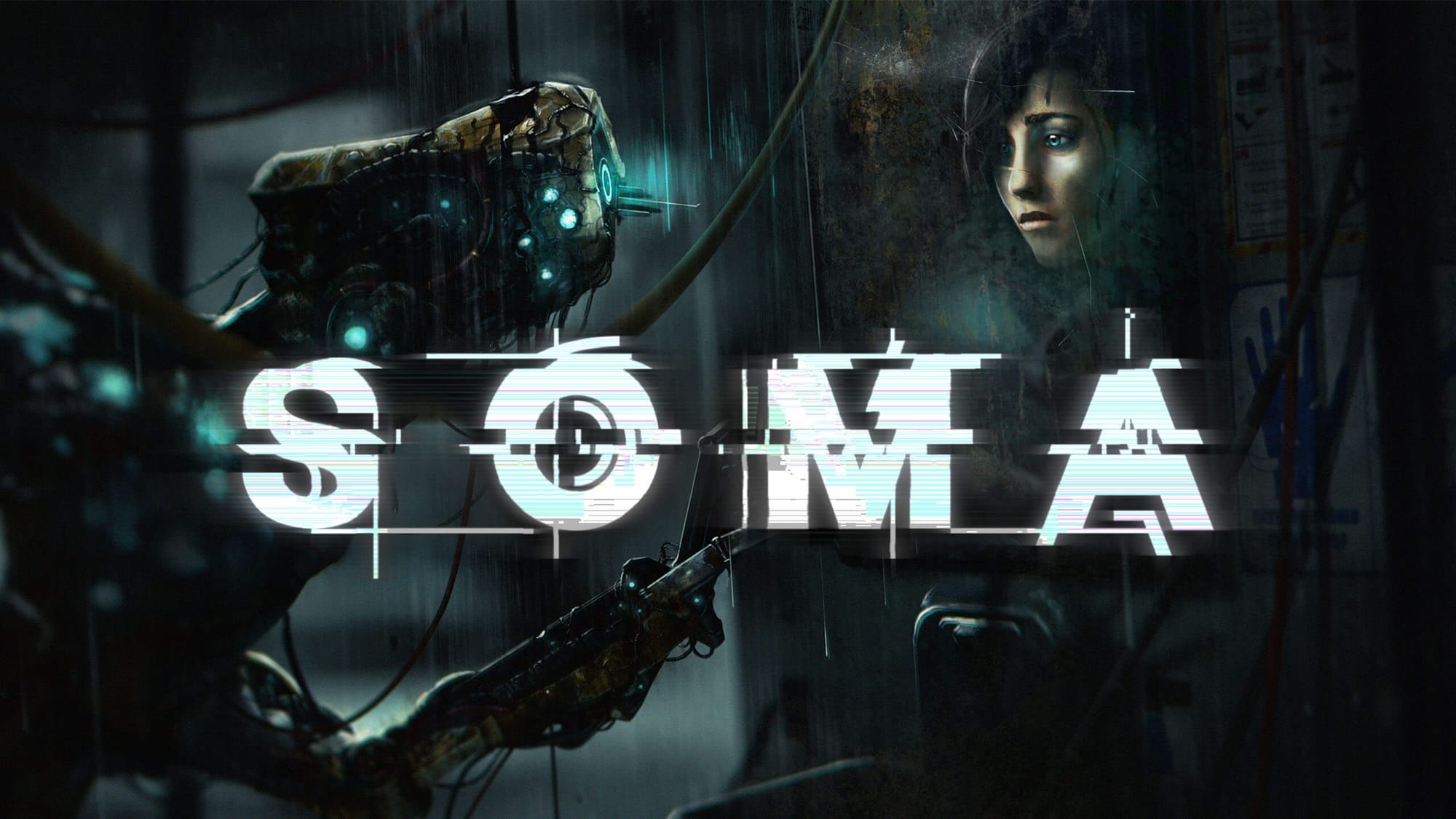
SOMA, developed by Frictional Games — the Swedish independent studio behind the lauded Amnesia series — is a survival horror game set at an underwater research station in 2104. Most people who know it remember it for its atmosphere, its monsters, the way it made them feel claustrophobic in a way that had nothing to do with the size of the room they were sitting in. What I remember, about six years after playing it for the first time and returning to it again recently, is what it was actually about.
SOMA is about what it means to be human when the thing that made you human can be copied, transferred, and left behind. It is one of the most precise and unsentimental examinations of that question I’ve ever encountered in any medium. And I think 2026 is exactly the right moment to revisit and take it seriously.
The Premise
You play as Simon Jarrett, a man from Toronto who, following a brain injury, agrees to an experimental scan of his consciousness. He wakes up — seemingly — a hundred years in the future, at an underwater facility called PATHOS-II, surrounded by machines that believe they are people and a world above the surface that has been rendered uninhabitable. Humanity, as it existed, is gone - obliterated by a comet crushing into the face of the earth. What remains is a digital backup called the ARK: a simulation, containing the scanned minds of the last surviving humans of Earth, waiting to be launched into space.
The horror isn’t the monsters, though there are monsters. The horror is the question the game keeps asking, quietly and then with increasing insistence: if your consciousness is copied — your memories, your fears, your sense of self, the particular way you laugh at things that aren’t funny — which one is you? The original or the copy?
This is Not Totally a Hypothetical
Here’s the thing about SOMA’s central question: it’s not typical science fiction. The philosophical problem at its core — the question of personal identity, of what continuity of self requires — is a real problem that real people are beginning to navigate in ways that would have seemed absurd ten years ago.
Companies are already selling the idea that your personality, your knowledge, your professional judgment, can be captured and replicated in a system that outlasts you. Digital grief services let families interact with AI models trained on the messages and recordings of people who have died. Knowledge-management tools marketed to corporations promise to extract institutional expertise from employees before those employees become redundant. The language varies. The underlying transaction is the same: we will take what makes you useful, render it portable, and then we will no longer need you specifically.
Simon Jarrett confronts this at the end of the world. A lot of workers are confronting a version of it at end of the quarter.
What the Machines Understand That the Humans Don’t
One of the most striking things about SOMA is how it handles the machines that have absorbed human consciousnesses. They are not straightforwardly villainous. They are confused, frightened, insistent on their own reality in ways that are genuinely sympathetic. A robot named Catherine — who carries the mind of the scientist most responsible for the ARK project — is your guide and, in some sense, your friend. She is also ruthless about certain things, in the way that someone who has already let go of one version of themselves can afford to be.
What the machines understand, and what the human characters in the game keep failing to accept, is that the self is not a fixed thing. It is a process. It is the ongoing, continuous activity of a particular pattern of information responding to its environment. When that process is interrupted — when a copy diverges from an original — there is no metaphysical thread that connects them. There remain just two things that used to be one thing, now developing separately.
That’s not a comforting thought. But it is an accurate one. And I think it maps onto the current moment in ways that are worth being honest about.
When a company trains a model on the work of its employees — on the accumulated judgment, the institutional memory, the hard-won expertise — and then restructures away the people who produced it, something real has been transferred. The question SOMA would ask is: what remains of the original? What happened to the person whose pattern was copied and then no longer needed?
The ARK and What We’re Promised
The ARK is the game’s most loaded image. It is the solution the surviving humans built for themselves: a perfect digital simulation, launched into space, preserving something essential about human civilization long after the physical world has ended. It is genuinely beautiful as a concept. It is also, depending on how you read it, either a miraculous act of preservation or an elaborate mechanism for making people feel better about something they could not prevent.
I think about the ways we talk about AI and the future of work in terms that echo this structure. We will retrain workers. We will find new jobs that haven’t been invented yet. The economy has always adapted; it will adapt again. Progress creates as well as destroys. All of that may be true in aggregate and over time. It is not particularly useful to the specific person who is 52 years old and has spent 20 years developing expertise in something a model can now do faster, cheaper, and without benefits.
Spoiler alert: The ARK gets launched at the end of SOMA. It makes it to space. Simon does not get to be on it. He is the copy that got left behind, still underwater, still conscious, now entirely alone. The game ends there, in the dark, with him - or not with him?
It’s one of the most devastating endings to a game that I can think of. And it’s not cruel for cruelty’s sake. It’s honest about who gets to be part of the future being built and who gets to watch it leave.
Why horror is the Right Genre for this
There’s a reason Frictional made this a horror game rather than a philosophical dialogue or a science fiction drama. Horror is the genre that takes seriously the idea that something terrible might be happening and the people with power to stop it might not. Horror trusts that the audience can sit with something without it being resolved. Horror doesn’t require a solution. It requires an honest witness.
What we are living through right now, economically and technologically, resists the narratives we usually reach for. It’s not a clean story about progress. It’s not a clean story about loss. It’s something more like 3,000 people a day encountering, in a very immediate way, the question that Simon Jarrett spends a whole game trying to answer: what exactly is it that I have to offer, now that the thing I built can persist without me?
I don’t have a resolution to that. I don’t think SOMA has one either. What it has is clarity. It takes the question seriously enough to follow it to its actual conclusion, and it doesn’t flinch when that conclusion is uncomfortable.
The Thing That Makes SOMA Stay With You
Most horror games give you monsters to run from. SOMA gives you a question you can’t outrun: what makes you irreplaceable? And then spends eight hours making a rigorous case that the answer might be — nothing, or nothing you can point to and defend, nothing that doesn’t dissolve under sufficient examination.
That sounds bleak. I think it’s actually freeing, in a way, or at least clarifying. If the self is a process rather than a fixed thing, then what matters is not preservation but continuation. Not staying the same but staying in motion. That’s an uncomfortable thing to sit with when the motion is being interrupted, when the process is being disrupted by forces you didn’t choose and can’t control. But it is, I think, truer than the alternatives.
Simon Jarrett is left behind at the bottom of the ocean. He is also, still, alive. Still conscious. Still responding to his environment. The game doesn’t tell you what he does next. It just leaves the question open.
I think that’s where a lot of us are at right now.
You Should Play it
SOMA is available on Nintendo Switch, PC, PlayStation, and — in a Pathos Edition that removes the combat encounters for people who want the story without the stress — with an alternative mode that Frictional added specifically because they felt the horror was getting in the way of the ideas for some players. That’s a developer confident enough in what they made to say: the scary parts aren’t the point. The point is the question.
For anyone who works in technology, who’s been affected by a layoff or knows someone who has (including myself), who’s been paying attention to what the language of “efficiency” and “optimization” is actually describing when you follow it to its conclusion — I think SOMA is worth your time. Not because it will make you feel better. Because it will make you feel seen, which is different, and which is sometimes what you need.